
September 25, 2026
My Body Is an Archive of Loss
Sandy’s Endometriosis Story
Endometriosis is often described in statistics: one in ten women of reproductive age worldwide, an average diagnostic delay measured in years rather than months, a condition that shapes fertility, careers, and relationships long before most people have heard its name. What statistics cannot capture is what it feels like to be one of those numbers for decades, to be diagnosed as a teenager and still be untangling the grief of it in your thirties. Sandy is the second woman to share her story as part of this collaborative art project with photographer Phoebe Wingrove, photographed in deep cobalt blue rather than the project’s usual red, a colour she chose deliberately to echo her own experience. This is Sandy’s story, in her own words.
One in Ten, and Still Alone
Endometriosis affects an estimated one in ten women and girls of reproductive age worldwide, roughly 190 million people, according to the World Health Organization. It is one of the most common gynaecological conditions on earth, more widespread than diabetes, and yet it remains one of the most misunderstood, largely because it hides in plain sight. There is no visible rash, no cast, no obvious sign to explain the exhaustion, the doubled-over pain, or the plans cancelled at the last minute. Symptoms typically include severe pain during periods, chronic pelvic pain that does not resolve when a period ends, heavy bleeding, bloating, nausea, and, for many, fertility difficulties. None of it shows up in a passport photo or a work meeting. For Christie, that invisibility has shaped almost everything about how she experiences the condition, from how she talks about it to whether she talks about it at all.
Being one of the 190 million women worldwide who live with endometriosis should mean that I feel less alone in this condition. And yet, that has not been my experience. From my diagnosis as a teenager to grieving a radical hysterectomy in my thirties, the journey has been marked by a profound sense of isolation.
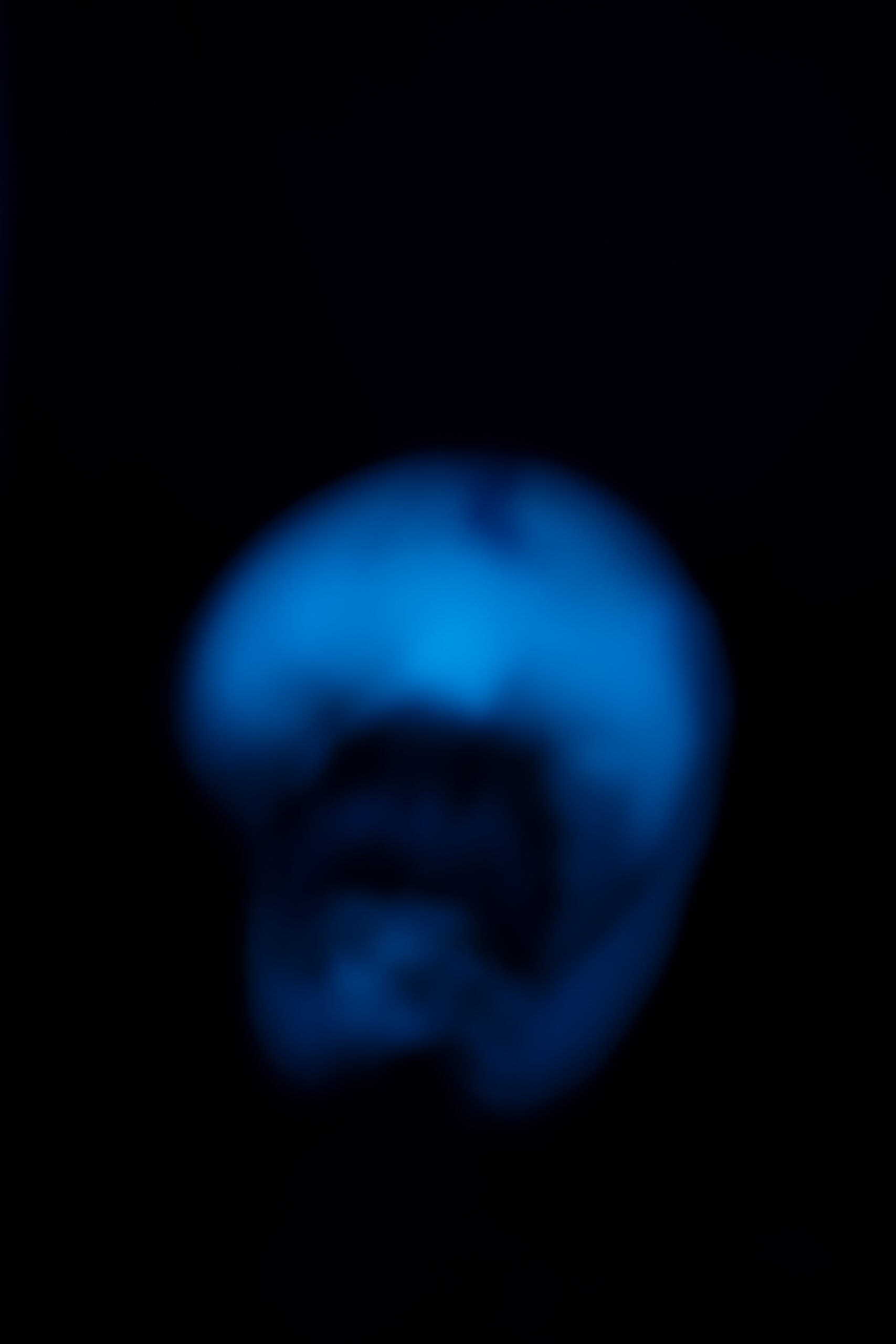
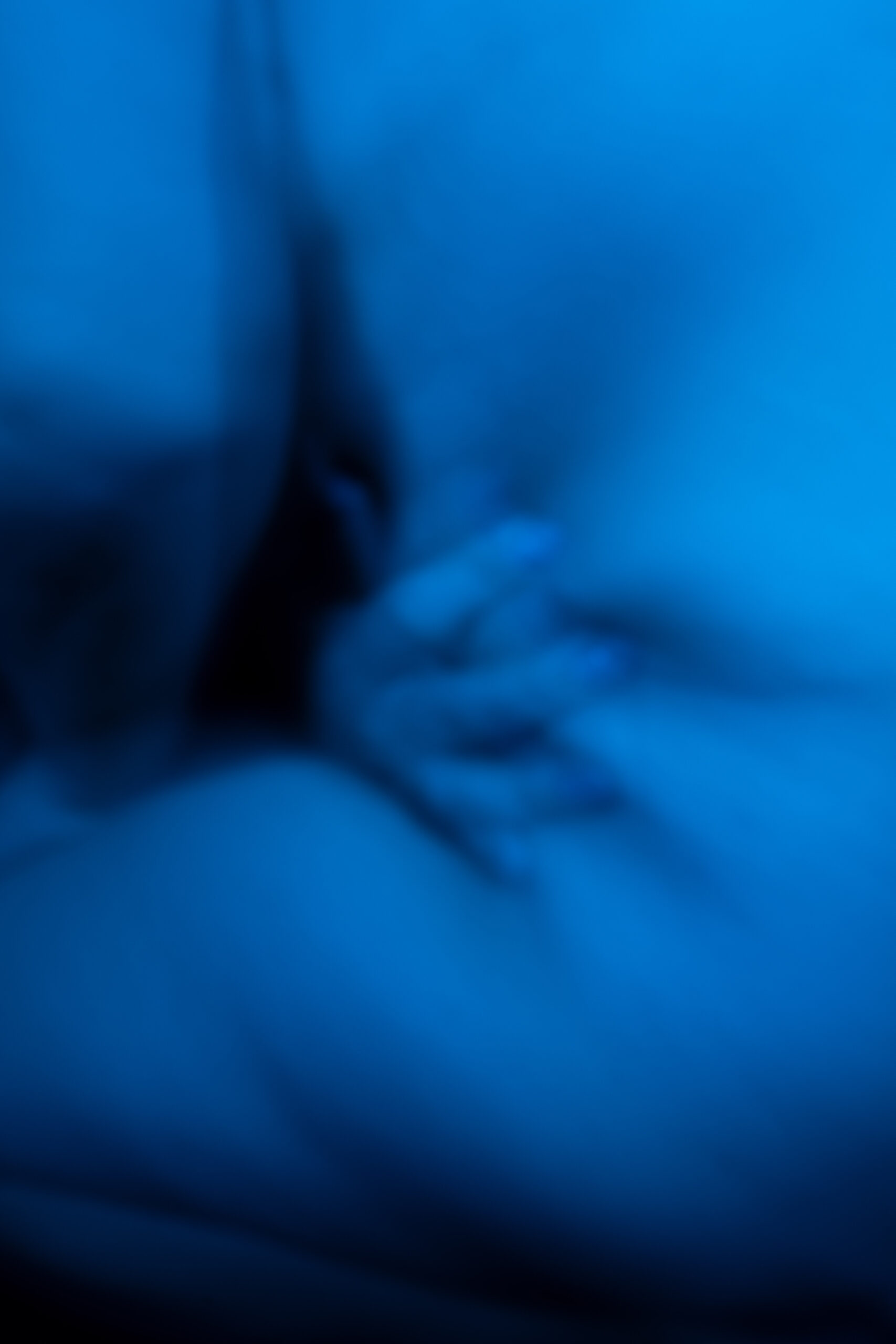
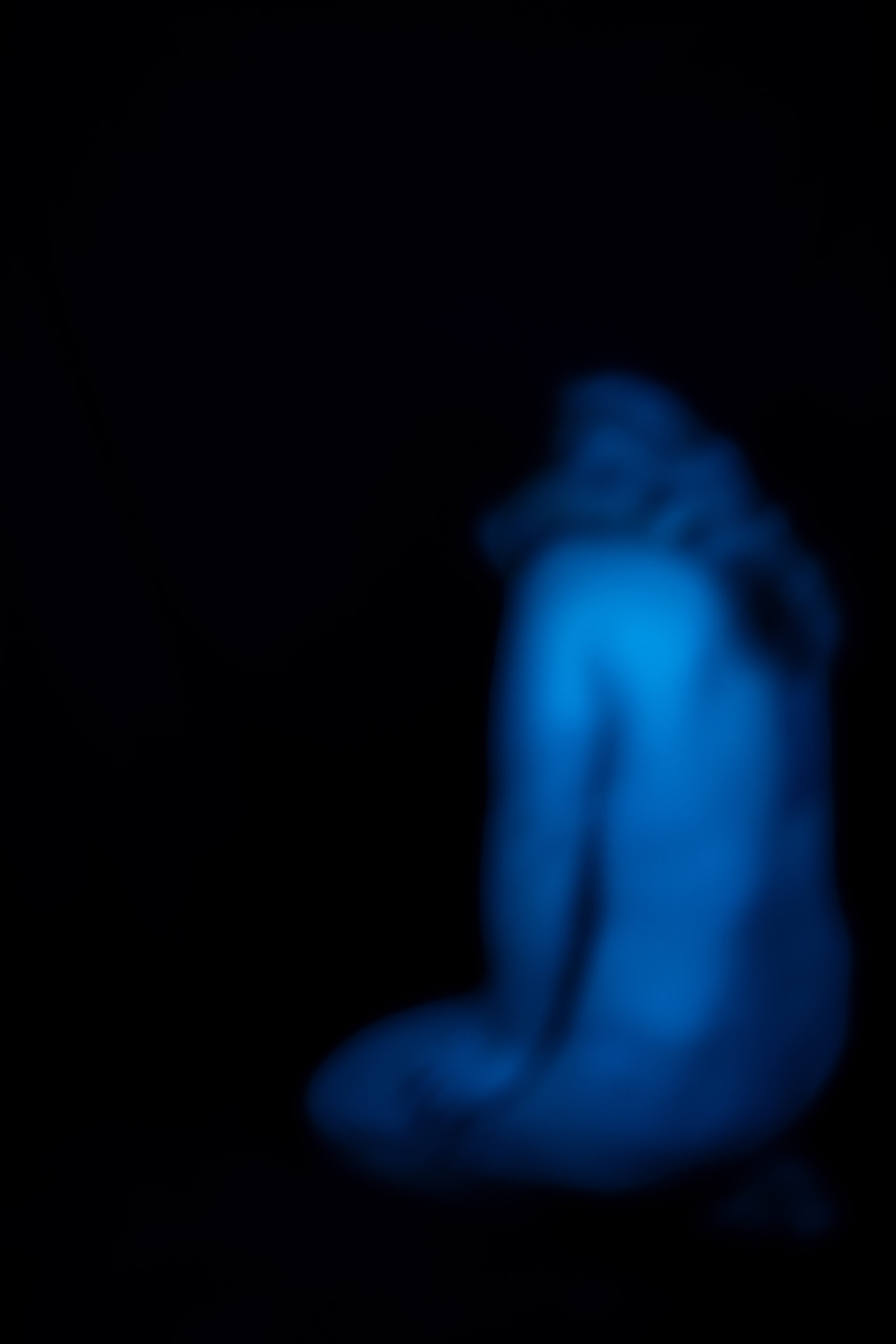
That gap, between how common a condition is and how alone a person can feel living with it, is one of the cruelest features of endometriosis. Diagnosis rates are high, awareness campaigns exist, and yet each individual case still tends to unfold behind closed doors, one dismissed appointment and one cancelled plan at a time. Part of the problem is timing: endometriosis is typically diagnosed in a person’s twenties or thirties, but symptoms very often begin in the teenage years, which means a significant stretch of anyone’s journey happens before they have the vocabulary, the confidence, or the medical access to describe what is happening to them. Sandy was diagnosed as a teenager herself, years before most of her peers would have any concept of what endometriosis even was. Sandy’s photographs, drenched in blue light, sit inside that contradiction: a portrait of someone technically surrounded by 190 million others worldwide, and still navigating the condition largely on her own.
Gaslit and Misunderstood
Part of what drives that isolation, Sandy explained, is how the condition is treated by the systems meant to help.
The opportunity to take part in this project felt prescient — a way to honour my own passage through this cruel condition, but to stand in solidarity with those who are still suffering. Women who are so often gaslit by medical professionals undertrained to recognise the disease, and misunderstood by a wider public who still assume we are simply having ‘bad periods.’ I see you.
The numbers back her up. A recent survey found the average time to diagnosis in the UK has risen to eight years and ten months, up from the previous survey in 2020, meaning the situation is getting worse rather than better despite years of awareness campaigning. Nearly half of respondents saw their GP ten or more times before being diagnosed, 70% had been five times or more, and 78% reported being told, in one form or another, that they were making a fuss about nothing. 20% saw a gynaecologist ten or more times before a diagnosis was finally confirmed. Behind every one of those figures is a person like Sandy, describing symptoms, being sent away, and returning, again and again, often for years, to be believed. Sandy’s words, “I see you,” are addressed to every one of those women still waiting, still being told their pain is ordinary, still being handed painkillers and sent home. It is a small phrase carrying a large amount of solidarity, and a direct answer to the isolation she describes in the very same breath.
No Beginning, No End
For Sandy, part of what makes endometriosis so difficult to communicate is its shapelessness, the way it refuses the tidy structure of illness narratives with a clear before and after.
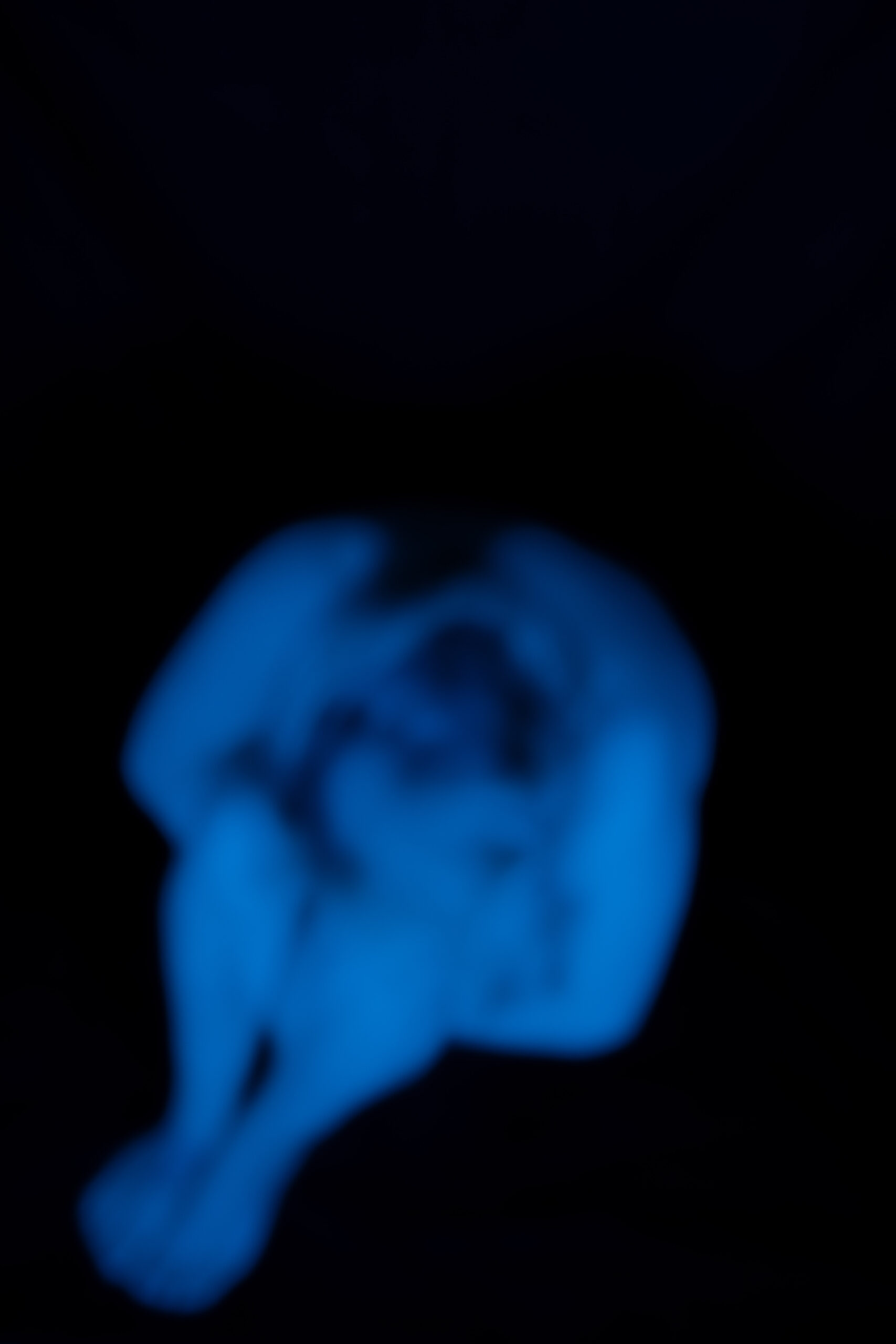
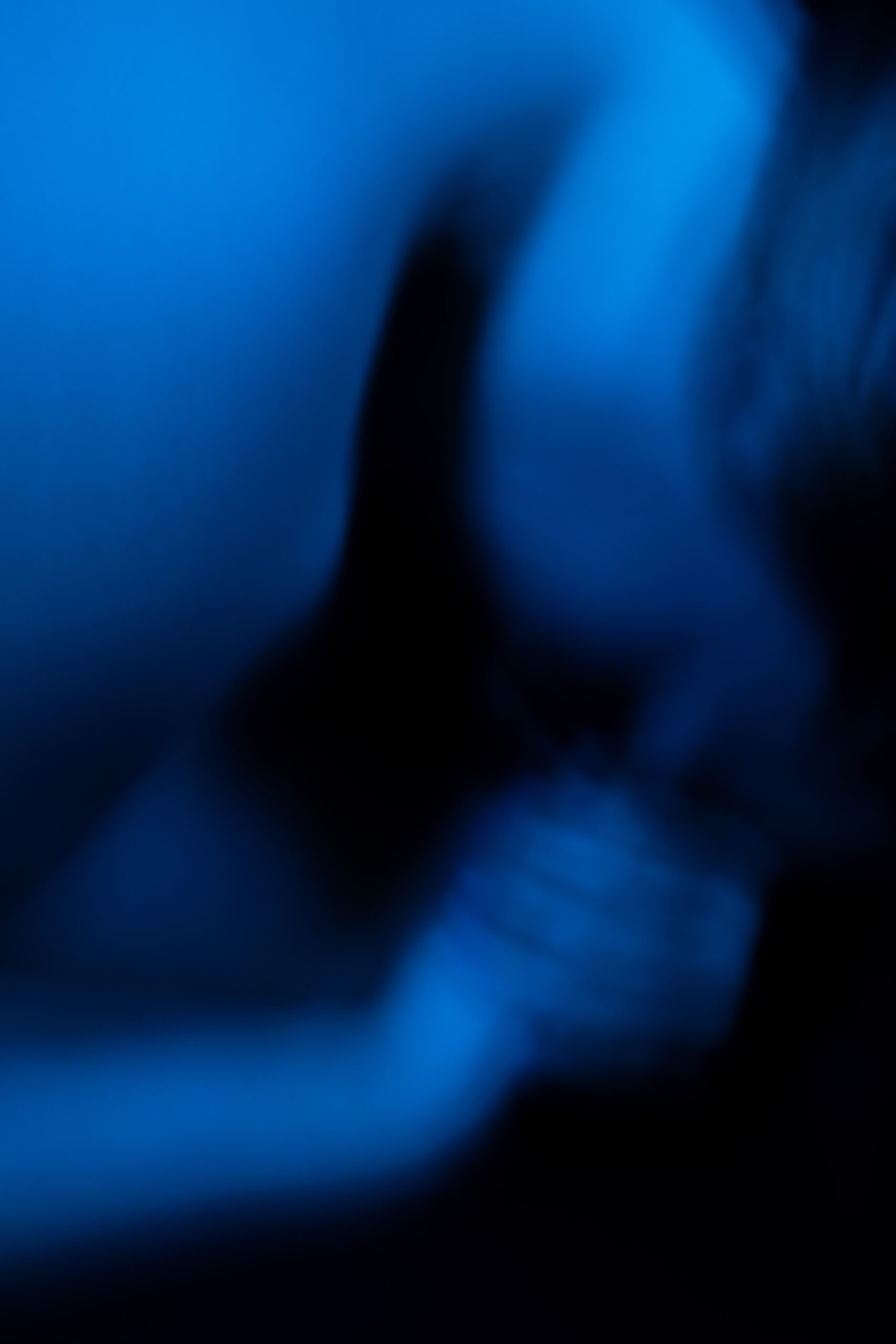
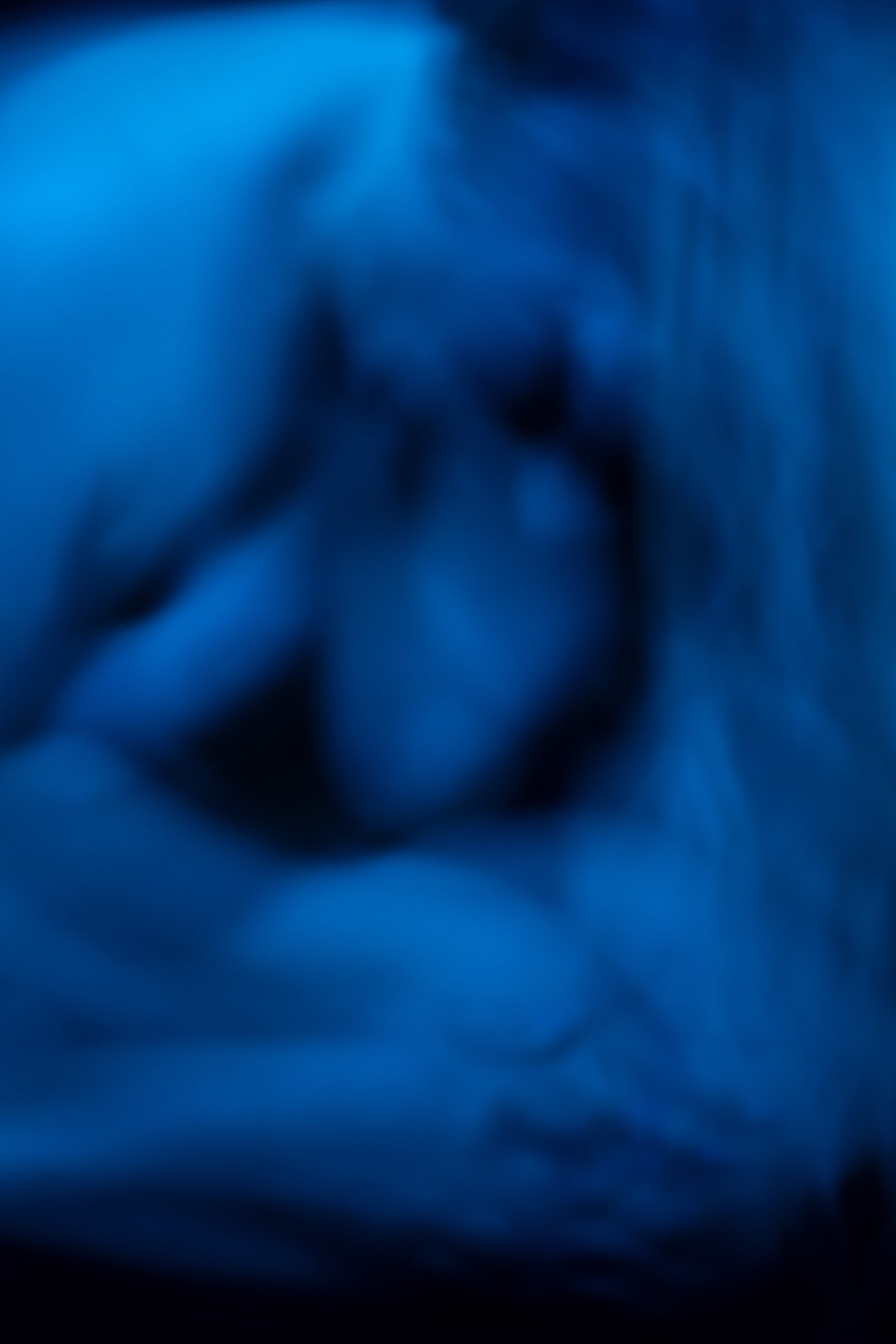
“Endometriosis does not have a clear beginning or end. This project and Phoebe’s artistic style captures that reality so profoundly. My naked body, drenched in blue light and photographed by Phoebe, becomes an embodiment of grief. Grief at being unheard in my suffering. Grief for the years of pain I endured.
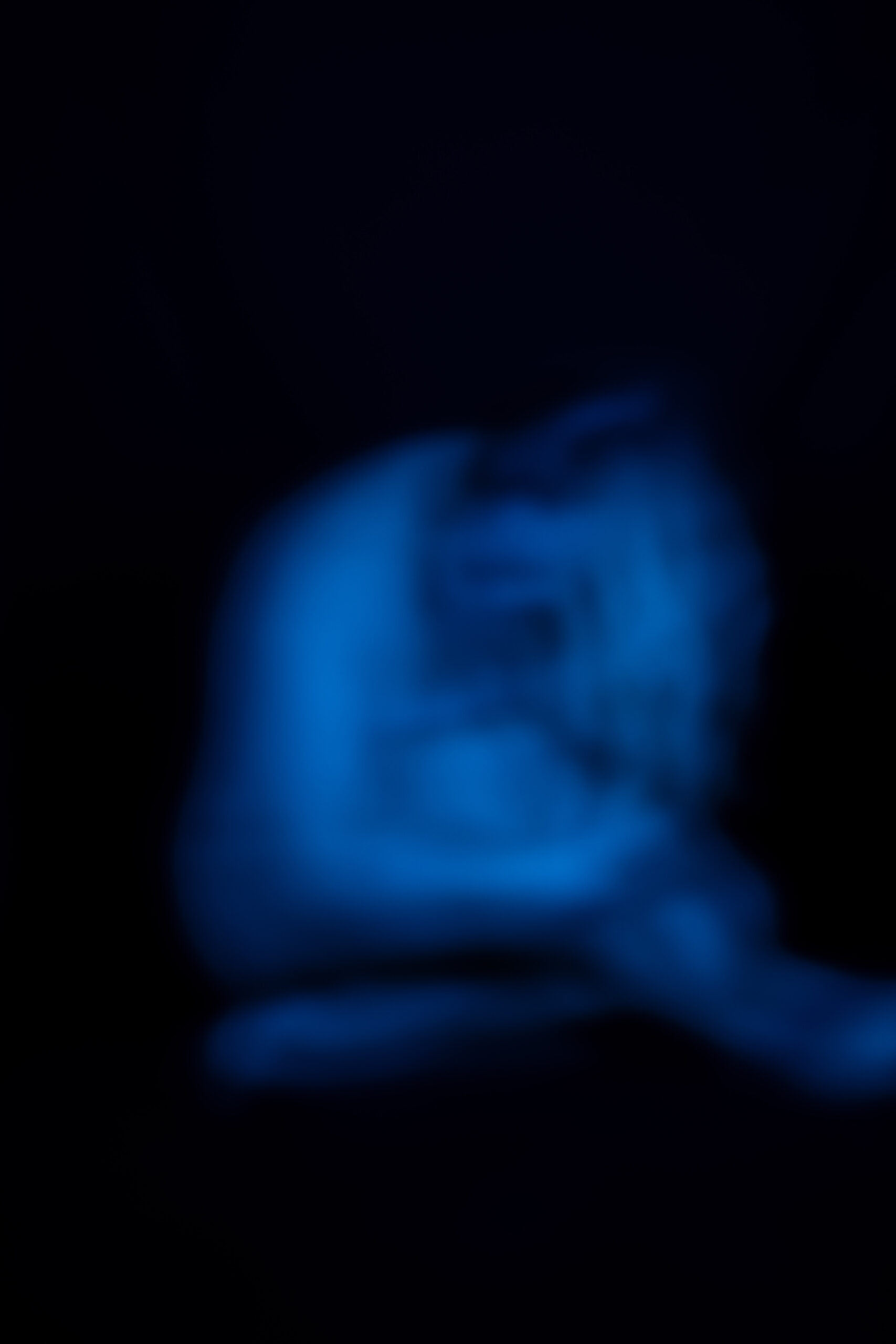
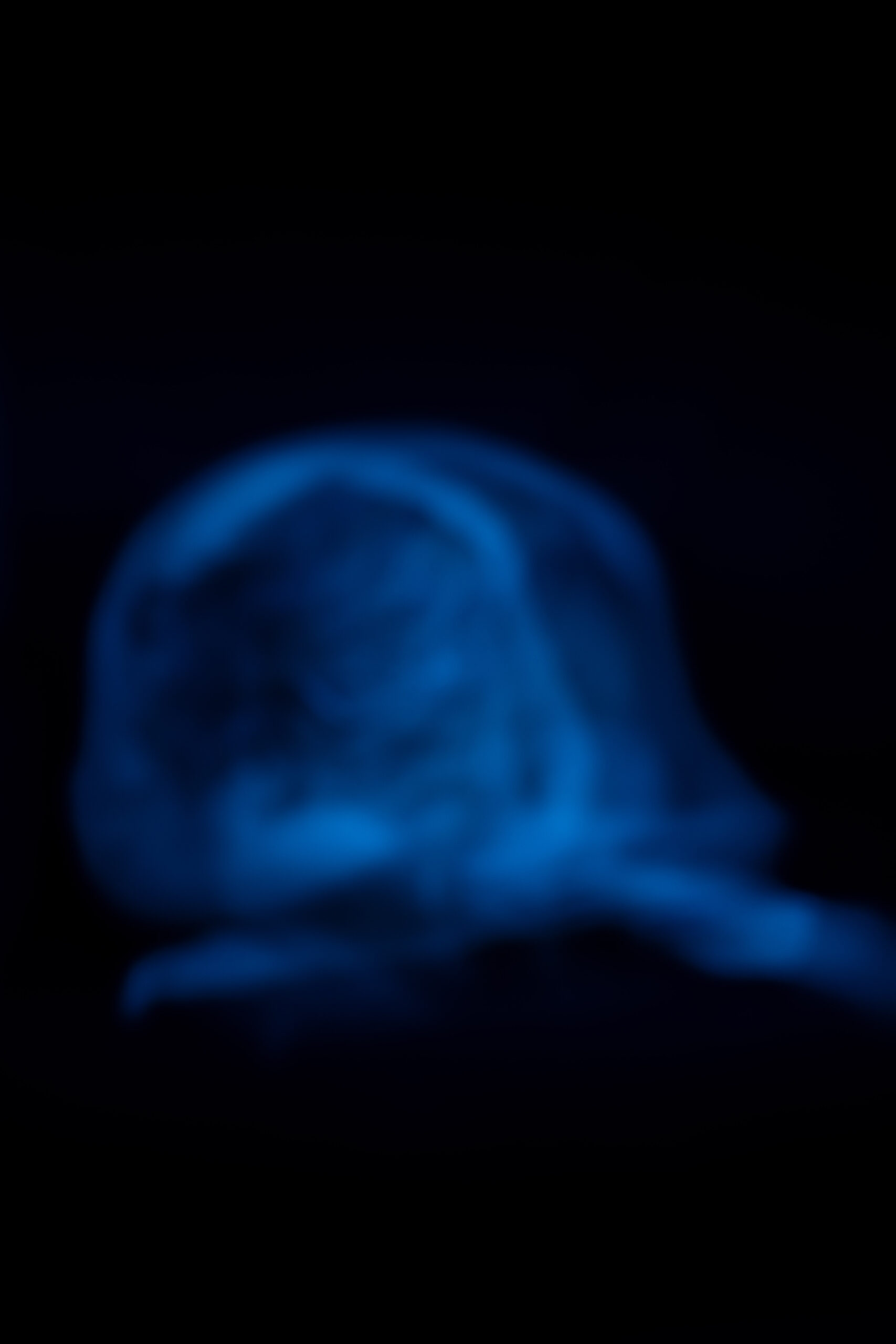
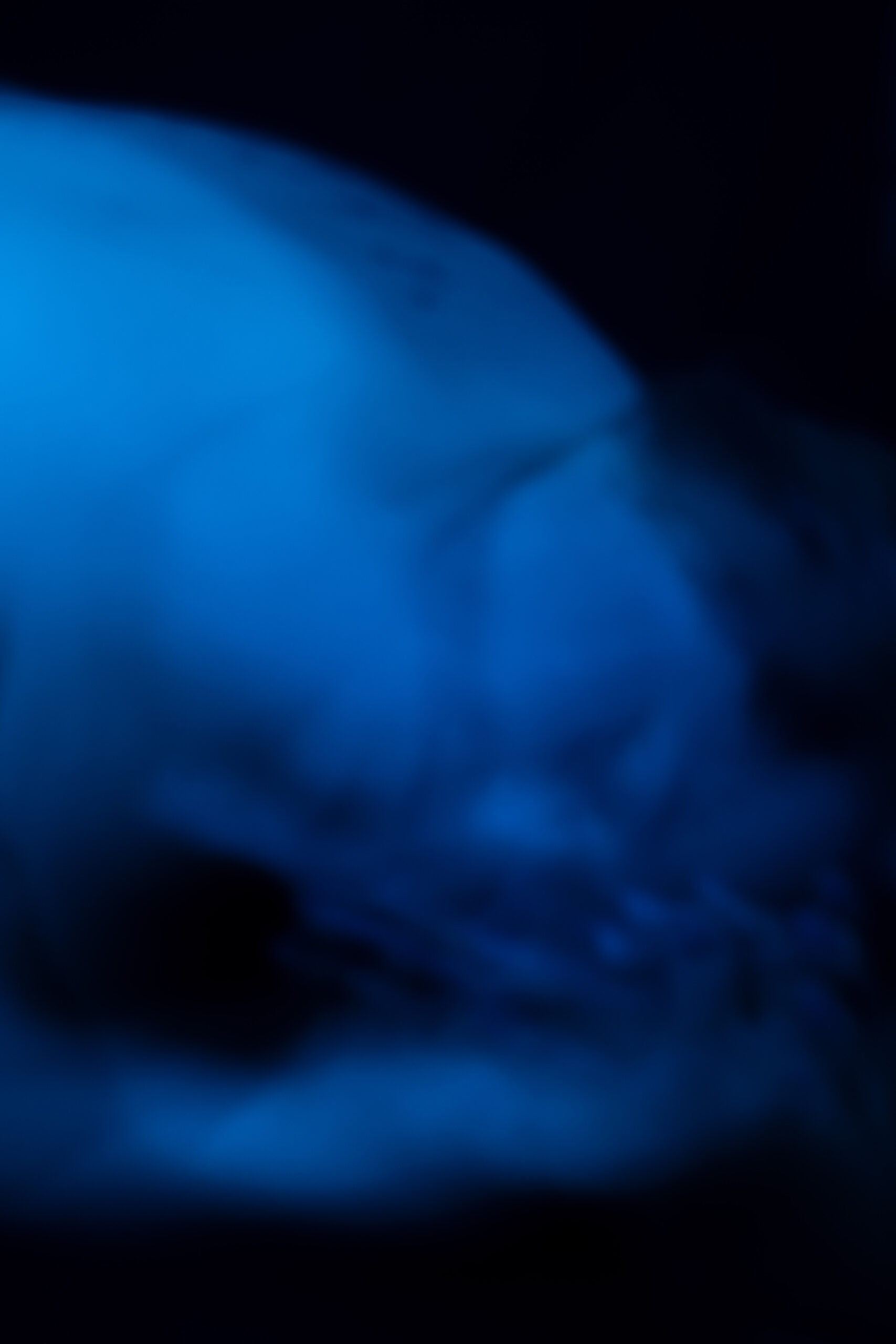
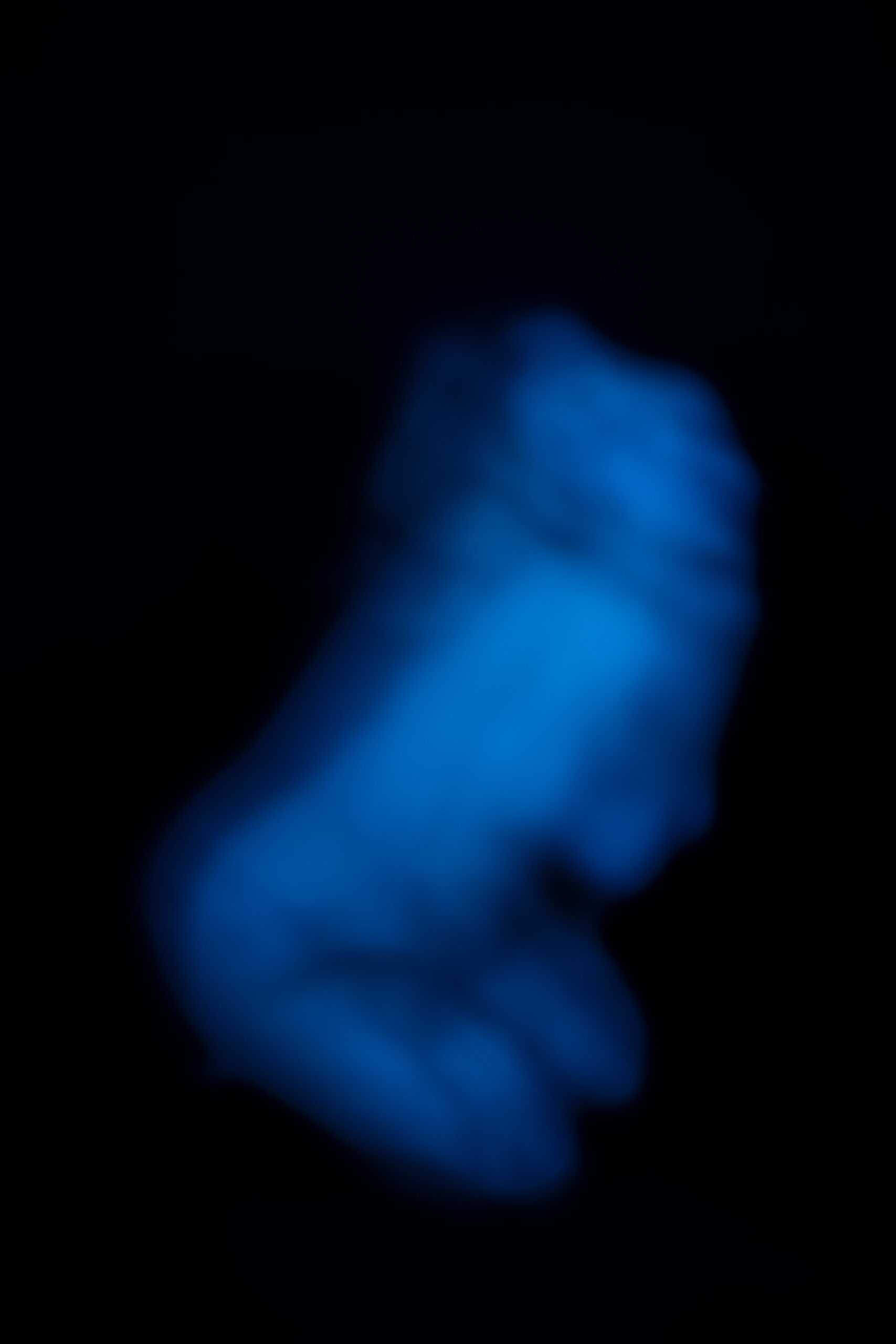
Grief is not a word usually associated with a physical illness, but for many people with endometriosis it is the most accurate one available. There is no single injury to point to and no single day of loss to mark on a calendar. Instead there is a slow accumulation: grief for years spent unheard, for treatments delayed, for a body that kept changing the terms of what was possible. Phoebe Wingrove’s choice to photograph Sandy in cobalt blue, rather than the deep red used elsewhere in this series, mirrors that shapelessness: blue does not carry the same immediate association with blood or anger that red does, and instead reads as something closer to depth, cold, and the slow, submerged quality of a grief that never quite surfaces or resolves.
An Archive of Loss
Sandy’s grief, though, is not only about the years before her diagnosis. It extends into a decision that reshaped her life in her thirties.
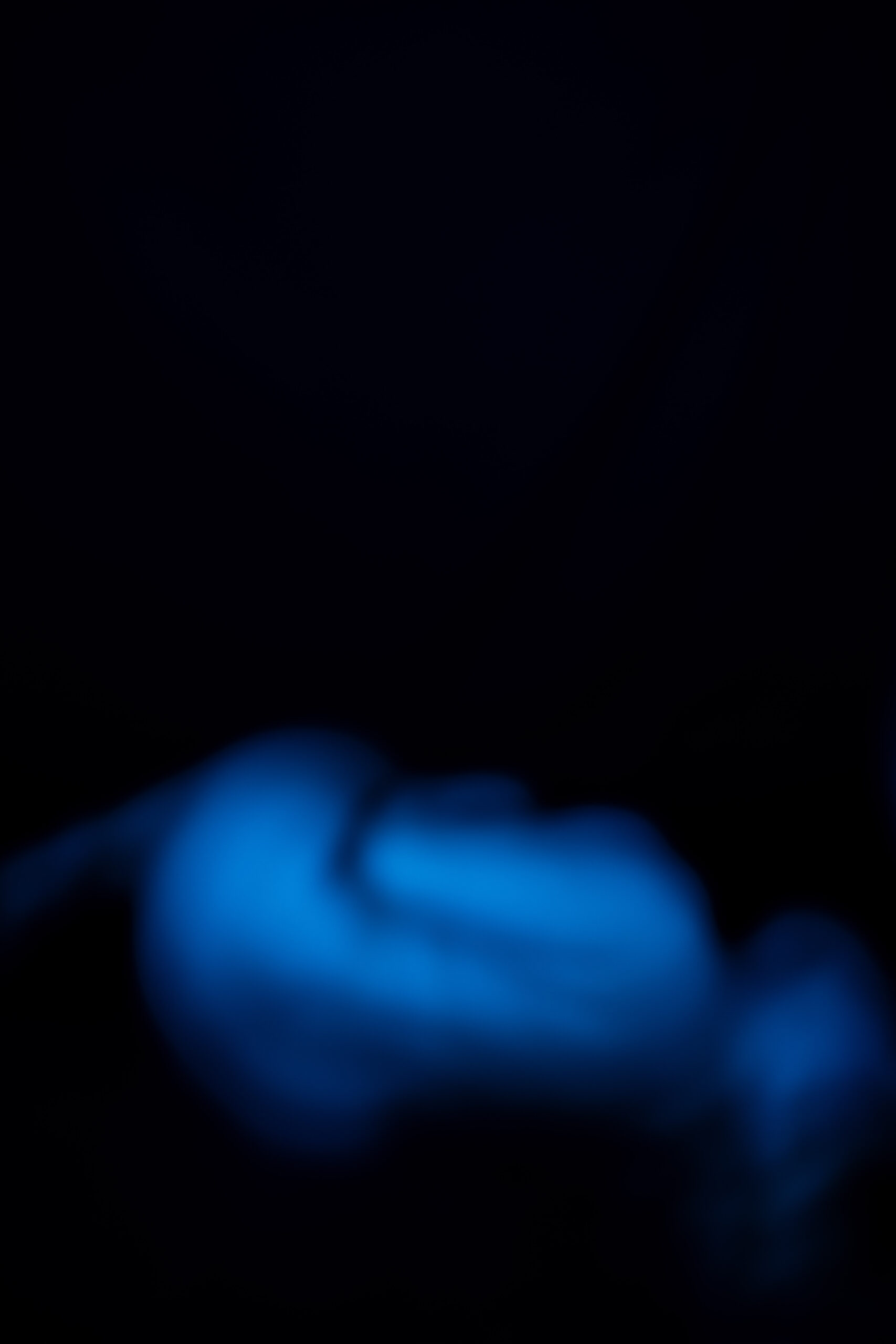
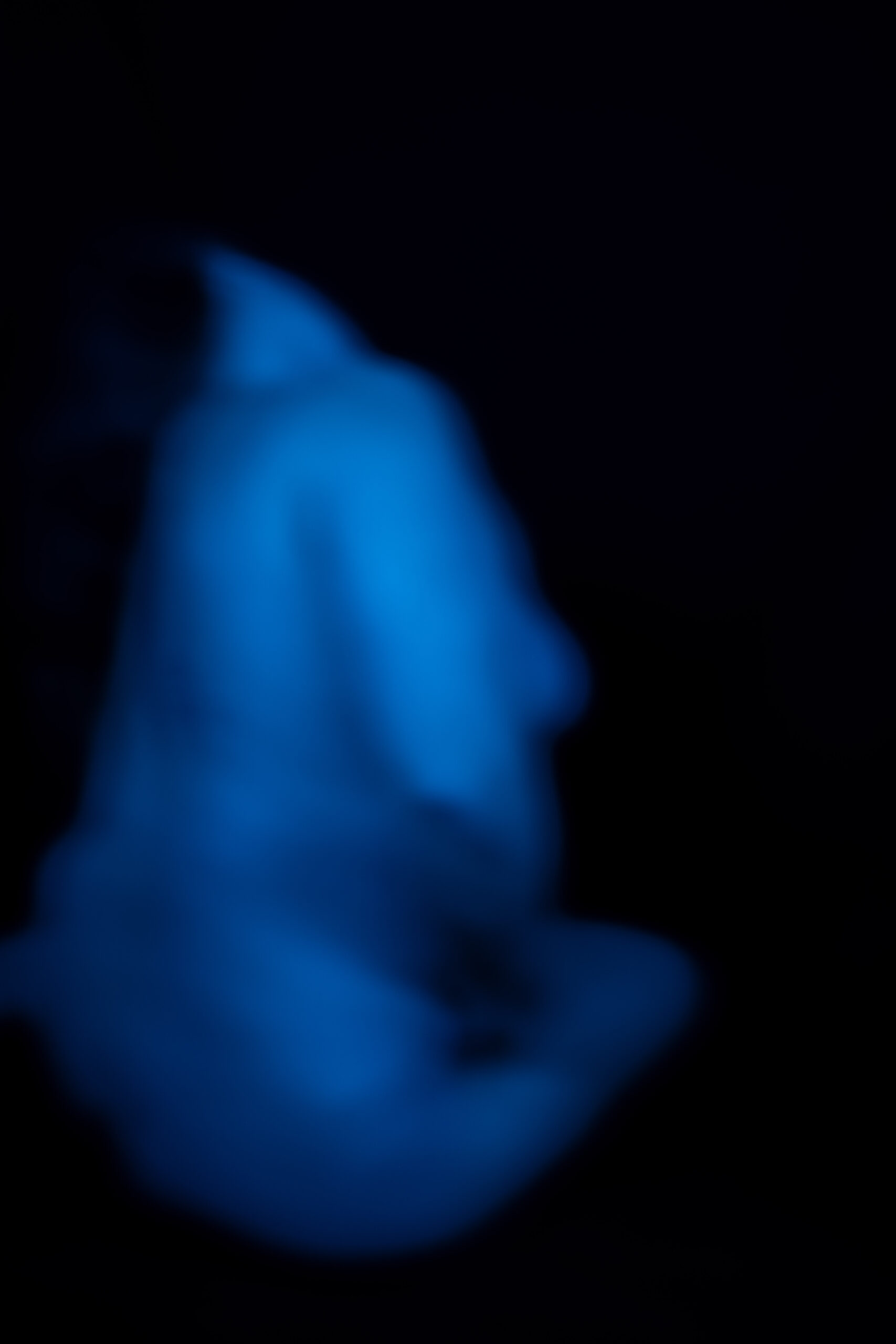
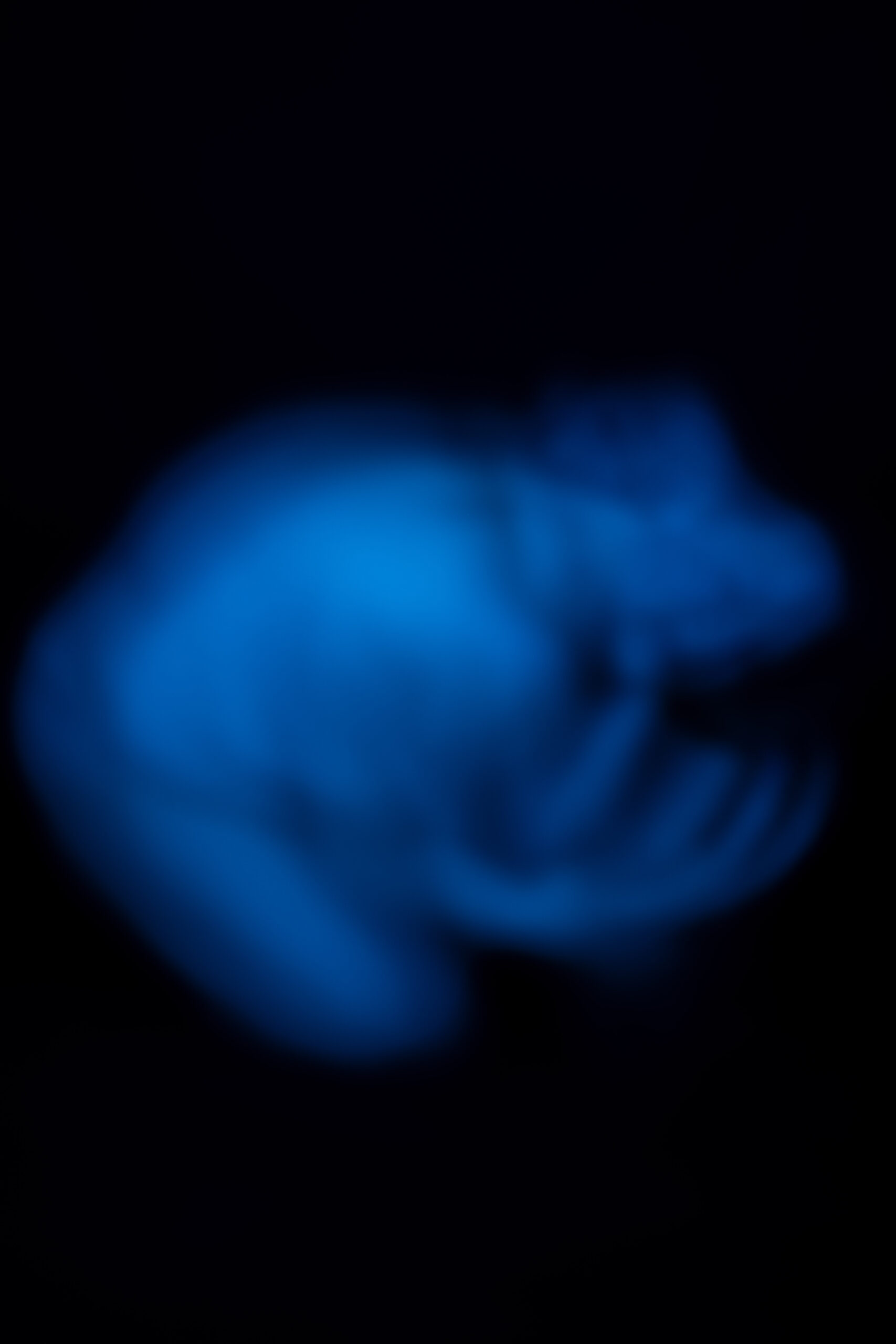
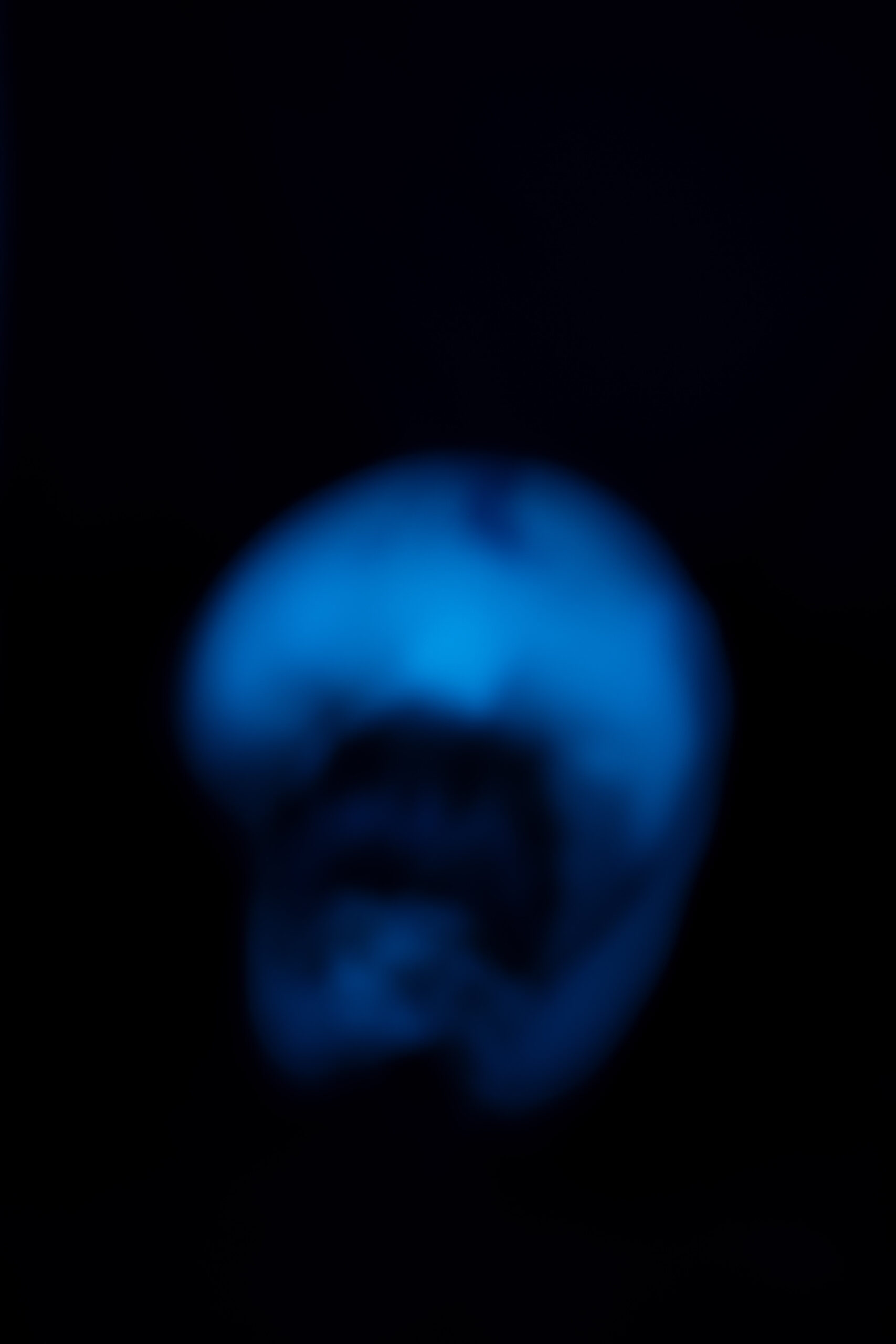
Grief for the parts excised from my body, the choices taken with them, and for the hormonal life that was irrevocably altered. My body is an archive of loss, now captured so powerfully in these images.
A radical hysterectomy can bring genuine relief from years of pain, and for many people with severe endometriosis it is the right and necessary decision. It can also close doors that were never fully opened, around fertility, around hormonal identity, around a future that had to be renegotiated on someone else’s timeline. Endometriosis is linked to infertility in as many as a quarter to half of the women who experience fertility difficulties, and for some, like Sandy, surgery arrives only after every less invasive option has already been tried and exhausted. The decision is rarely simple and rarely without cost, even when it is unquestionably the right one. Sandy’s phrase, “an archive of loss,” gives language to a kind of grief that rarely gets acknowledged publicly: the mourning of choices that illness, not the person living with it, ultimately made, and the quiet work of learning to live inside a body that has been permanently, irreversibly changed by a condition it did nothing to invite.
Why This Project Matters
Endometriosis South Coast partnered with Phoebe Wingrove because photographs can hold complexity that a statistic never can. A number like 190 million tells you the scale of endometriosis. It cannot tell you what it is to be diagnosed as a teenager and still processing a hysterectomy two decades later, or what it costs to keep explaining an invisible condition to people who assume “bad periods” covers it. Sandy’s carousel, and the three that will follow from Christie, Rowan, and Anna-Marie, exist to close that gap between scale and specificity, one story at a time, so that awareness stops living only in the abstract and starts living in real faces, real colours, and real words.
Support for Anyone Who Recognises This Story
If Sandy’s words land close to home, particularly the isolation of a decades-long journey or the grief bound up in a hysterectomy, please know that support exists specifically for this. Endometriosis South Coast offers peer support alongside this project, connecting people navigating diagnosis, treatment decisions, and post-surgical grief with others who have lived it rather than only read about it. Talking to a GP about a symptom diary, requesting a gynaecology referral directly when pelvic pain persists, and seeking a second opinion when you feel unheard are all reasonable, evidence-backed steps, not overreactions. If a hysterectomy or other surgery is on the table, it is worth asking your care team about the hormonal and fertility implications in plain language before deciding, and about what post-surgical support, including psychological support, will be available afterwards. No one should have to feel like an archive of loss without also being met with solidarity.
Thank you, Sandy, for turning thirty years of a complicated journey into something this generous, and thank you to Phoebe Wingrove for photographing that journey with such care. Sandy’s story continues across four carousels this September, and Christie’s story opened this series in the weeks before. Follow along, share this with someone who needs to hear “I see you,” and if you are one of the 190 million, know that this project was built for you too.
Words: Sandy · Photography: Phoebe Wingrove