
October 9, 2026
A Balled Up Mess of Flesh and Blood
Rowan’s Endometriosis Story
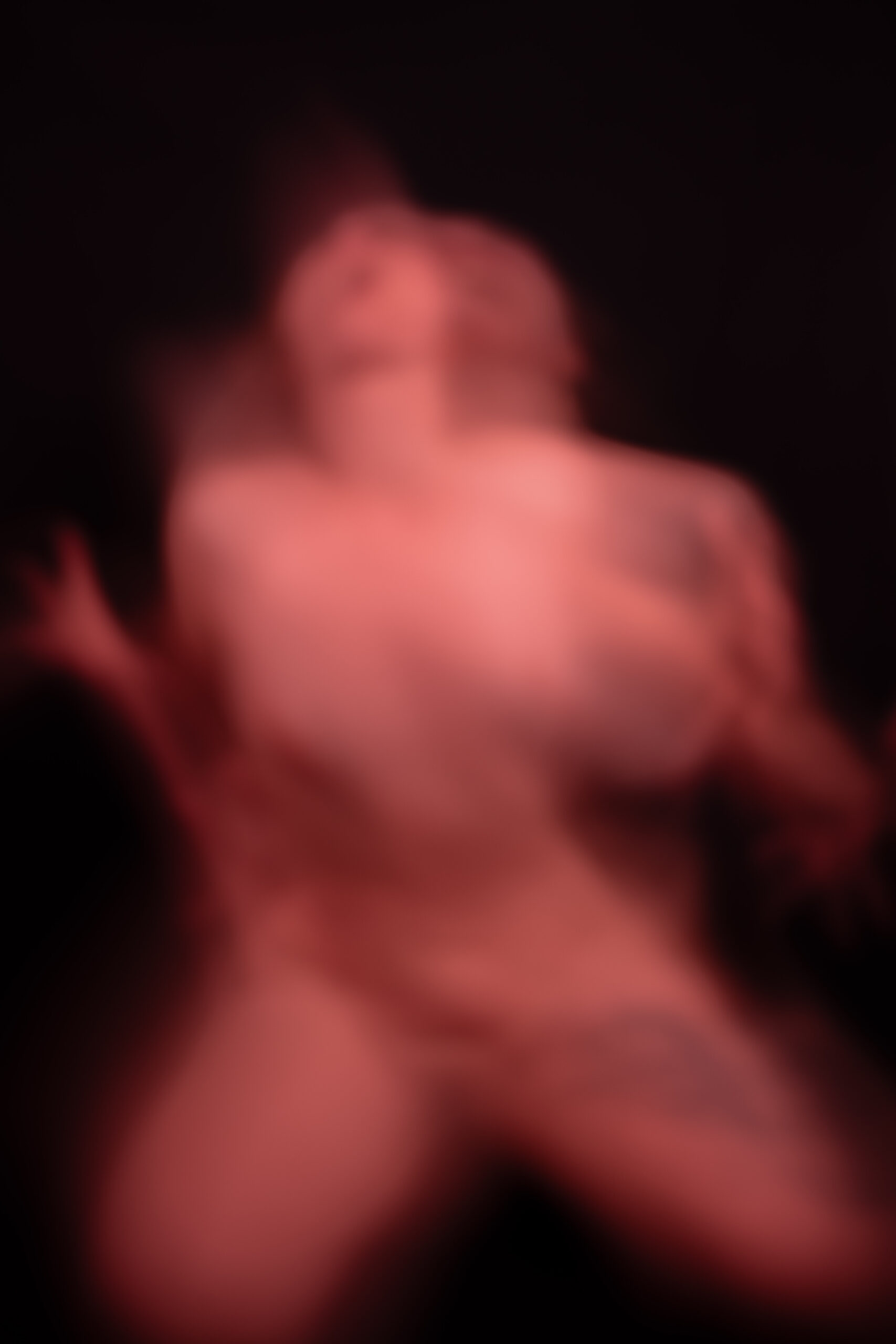
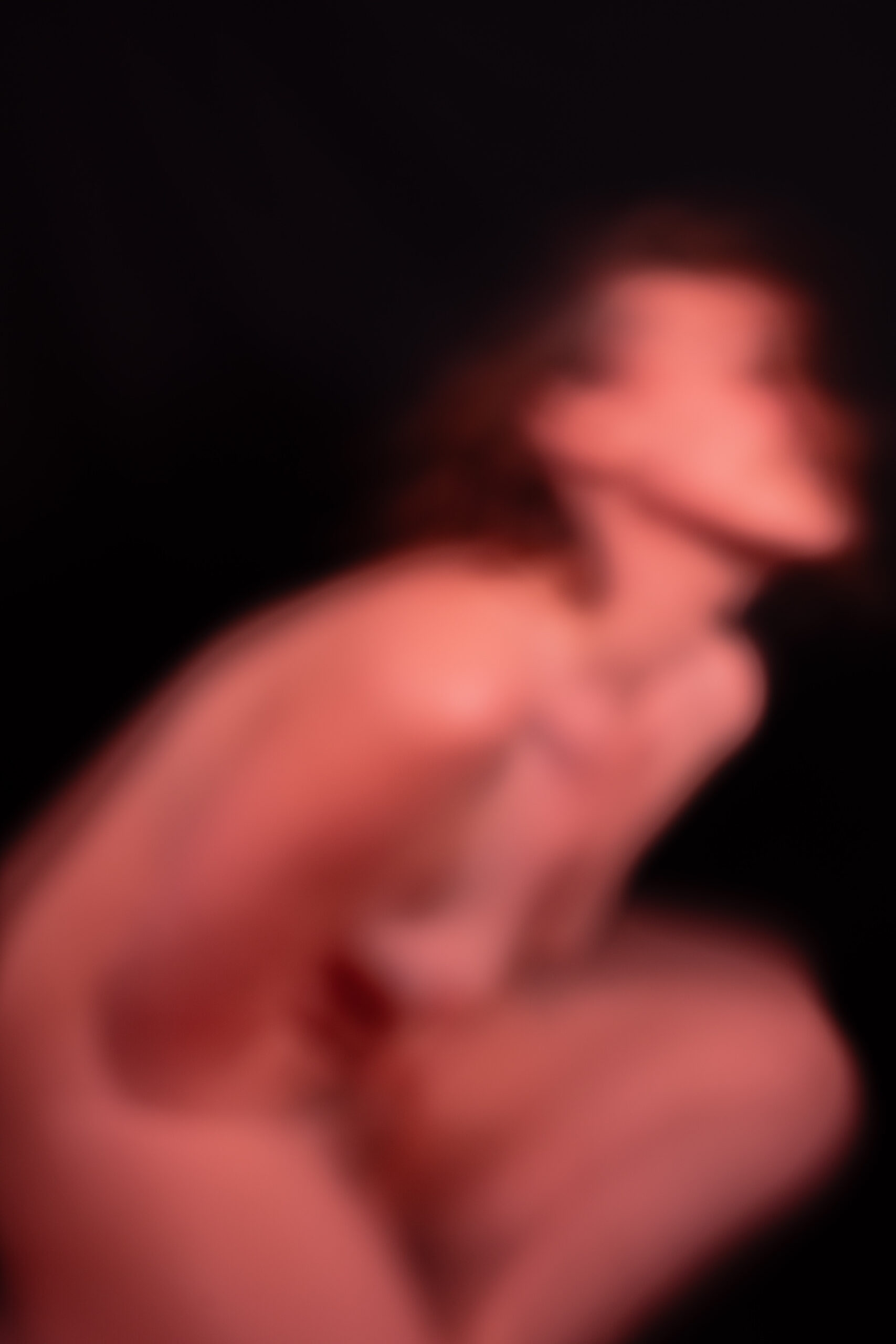
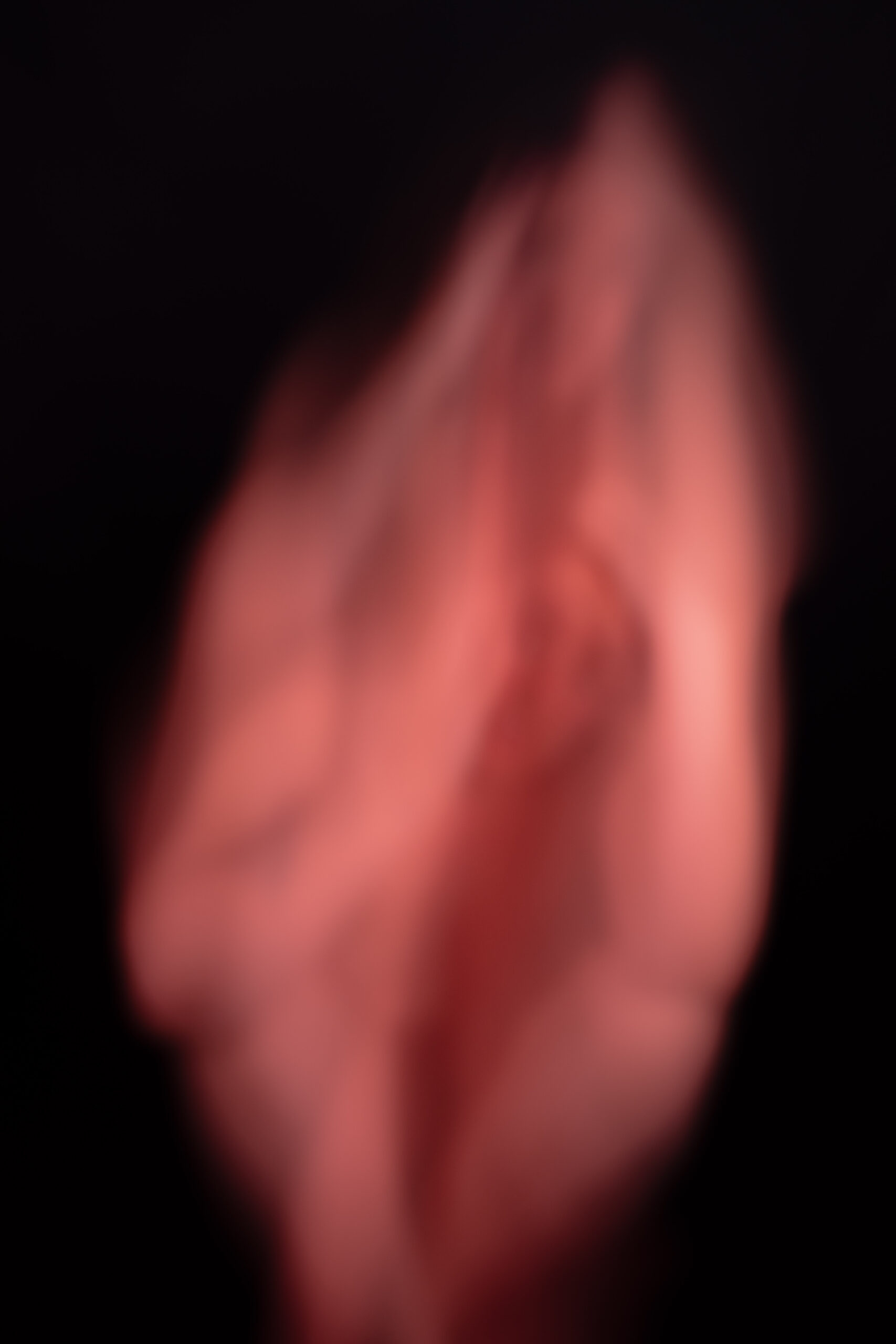
There is a particular kind of loneliness that comes from being in pain no one else can see, hear, or verify. It is a loneliness that has nothing to do with how many people are in the room, and everything to do with how far away pain can make you feel from your own body and everyone around it. Rowan is the third person to share their story as part of this collaborative art project between Endometriosis South Coast and photographer Phoebe Wingrove, photographed in soft nude and pink tones against pure black. Where Christie chose red and Sandy chose blue, Rowan chose colours built for contrast, and a story built around what happens to a person, physically and psychologically, in the depths of an endometriosis flare. This is Rowan’s story, in their own words.
Why Take Part
Rowan’s reasons for joining this project were direct, and rooted in a hope that their own experience of isolation might soften someone else’s.
I wanted to take part in this project because I know how alone I have felt at times when experiencing endometriosis. My hope is that through creative representation, others too may feel less alone.
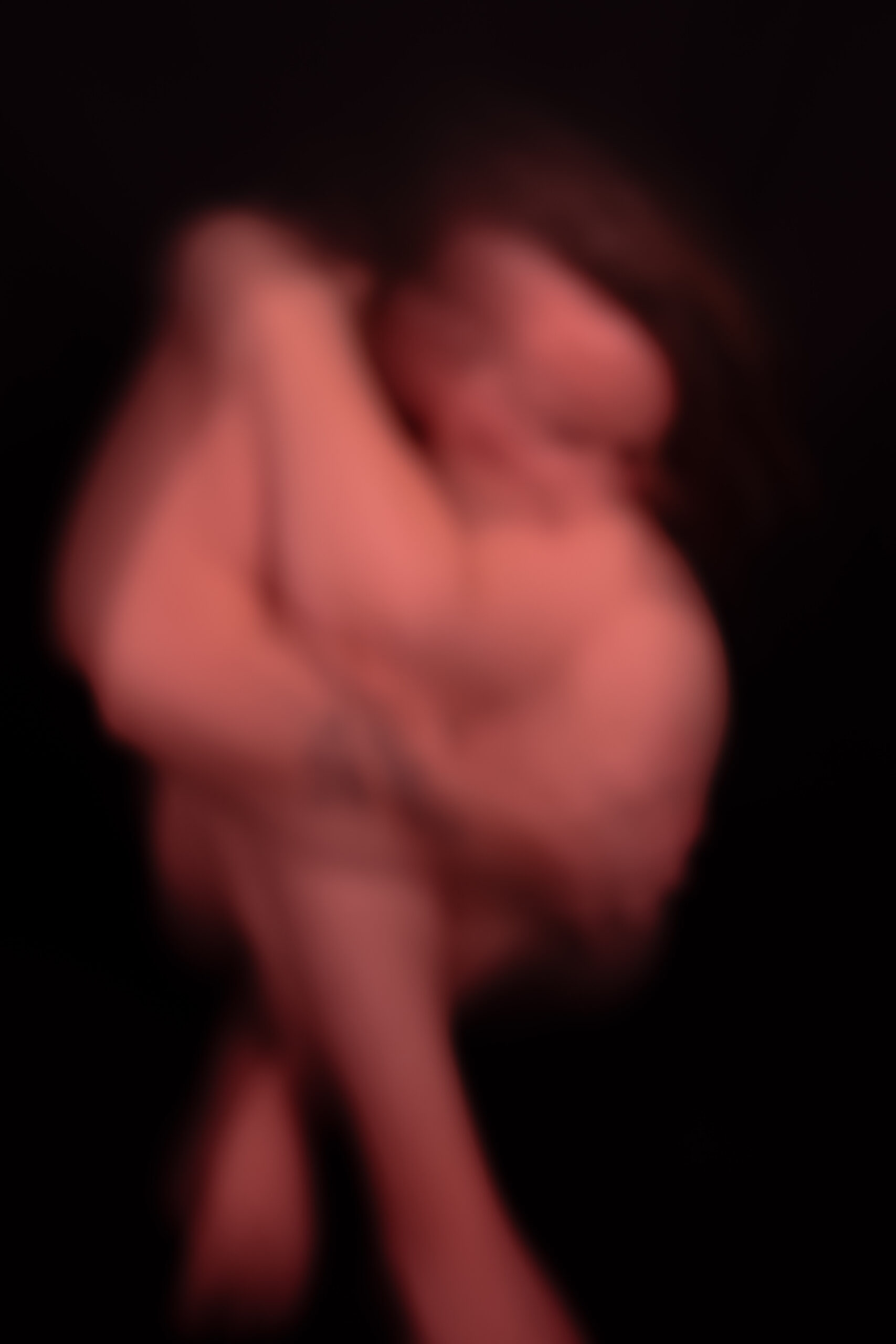
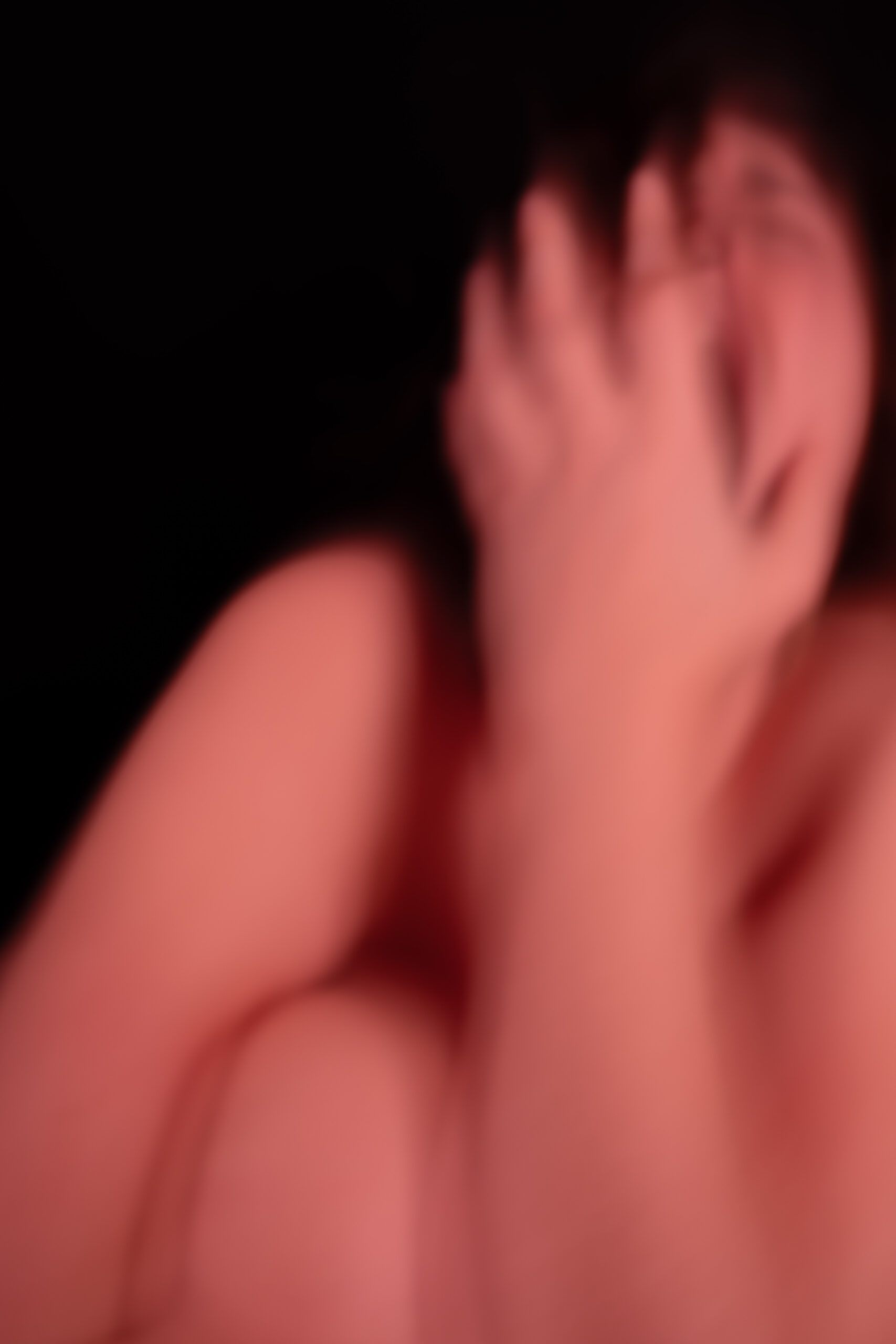
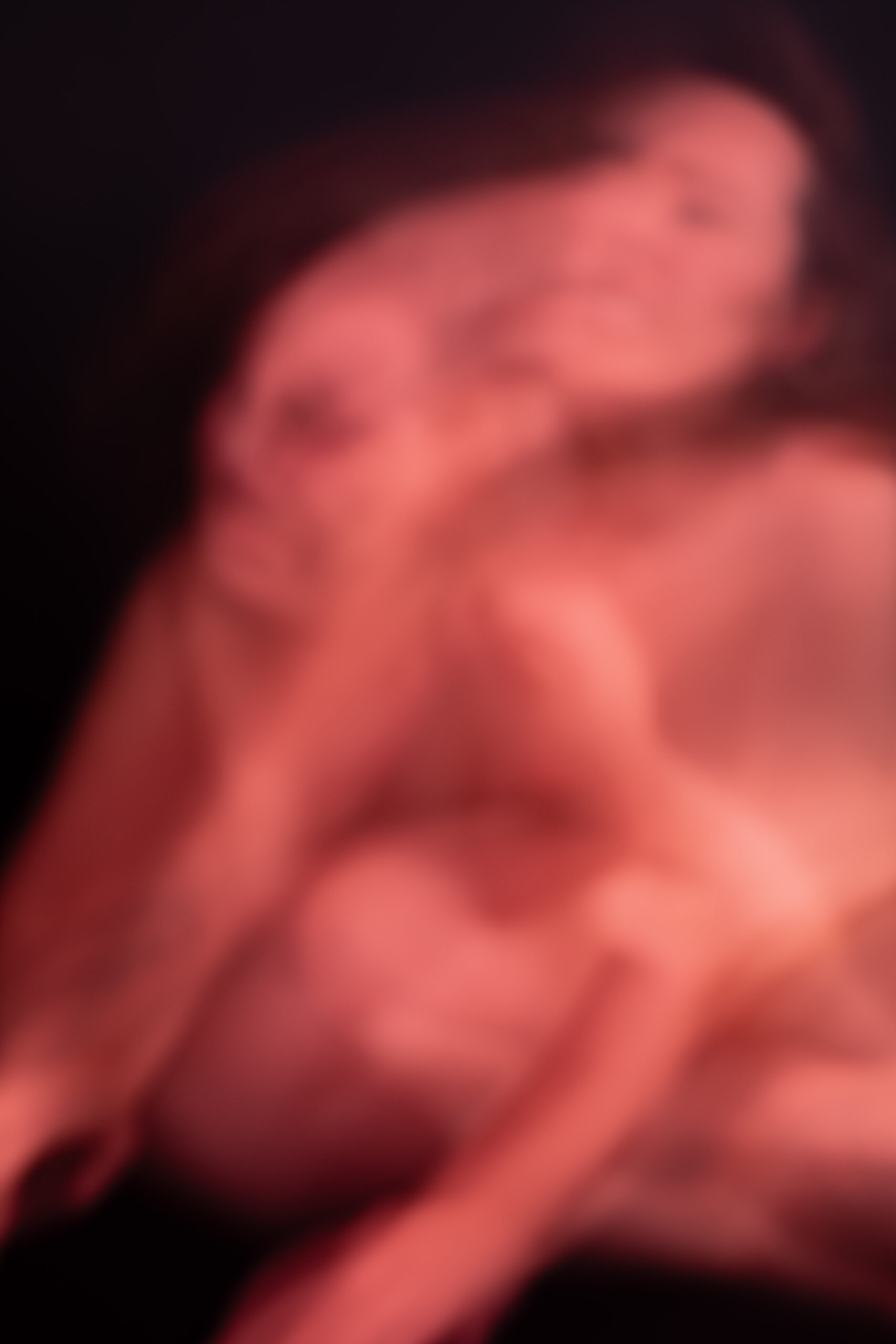
That hope, that visibility itself can be a form of comfort, sits underneath this entire collaborative art project. Endometriosis affects an estimated one in ten women and those assigned female at birth of reproductive age worldwide, roughly 190 million people according to the World Health Organization, yet the condition is so often experienced as a solitary one, playing out behind closed bathroom doors and cancelled plans rather than in any shared, visible space. Part of that isolation comes from how difficult endometriosis still is to name and explain, even to people who love you. Symptoms such as severe period pain, chronic pelvic pain, fatigue, and bloating are easy to describe individually but hard to convey in their full, compounding severity, and many people with endometriosis describe giving up on explaining a flare altogether, simply because the words available never quite land. Rowan’s decision to be photographed at their most vulnerable, mid-flare, mid-pain, is itself an act of resistance against that solitude, and an attempt to succeed where words alone so often fall short.
A Blackhole Abyss
Few descriptions of an endometriosis flare are as vivid, or as unflinching, as the one Rowan gave for their choice of colour and the state it represents.
I chose the colours nude and pink with the idea that it would contrast well against the black background. When I am in the depths of the pain, I feel so isolated, a balled up mess of flesh and blood lost in a blackhole abyss. Time no longer exists in this space, just the never ending hope that the pain will subside and doesn’t take me along with it.
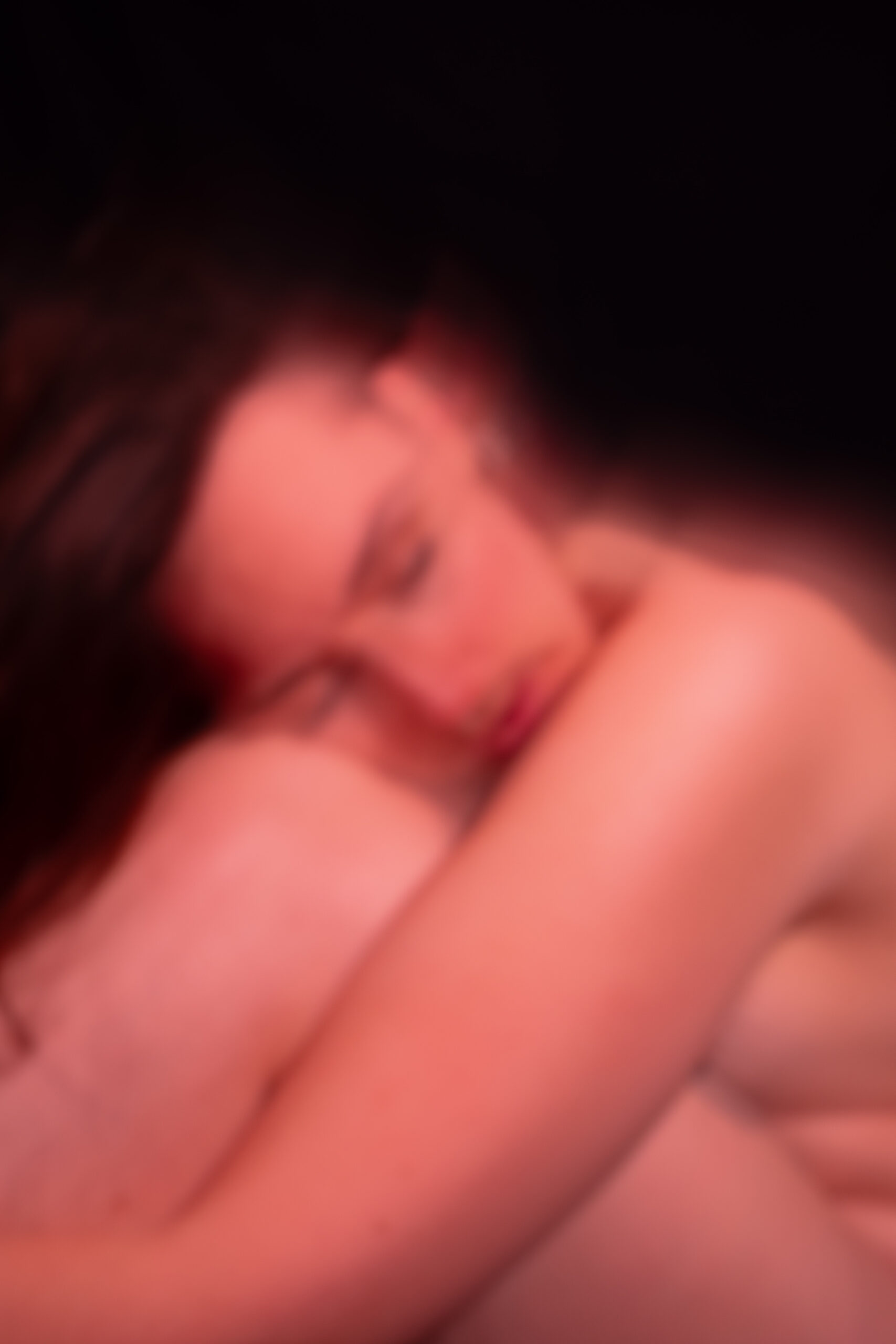
That sense of time collapsing is a detail worth pausing on. Severe, chronic pain is well documented to distort a person’s relationship with time, attention, and even their own sense of self, a phenomenon sometimes described clinically as dissociation under extreme physiological stress. It is not exaggeration or metaphor when someone with endometriosis says a flare feels timeless; it is a fairly literal description of what unmanaged, severe pain does to the nervous system. Research into endometriosis and mental health has found that a majority of people living with the condition report significant psychological stress, and it is easy to see why: pain severe enough to dissolve your sense of time is also pain severe enough to make ordinary emotional regulation nearly impossible in the moment. Rowan’s black background, pierced only by soft nude and pink, visualises exactly that: a body suspended in a space with no edges and no clock, waiting for a pain that follows no predictable schedule to loosen its grip.
An Animal, Hiding Away
Rowan went further, describing not just the pain itself but the primal, almost involuntary behaviours it produces.
In these moments, I feel connected to that primal state of being, an animal hiding away, allowing the body to do what it needs to to survive. Rocking, moaning, grunting, hissing. It’s like my insides are now my outsides, and the boundaries of my body have been torn down. A forced painful connection to all that I am. A bloody mess!
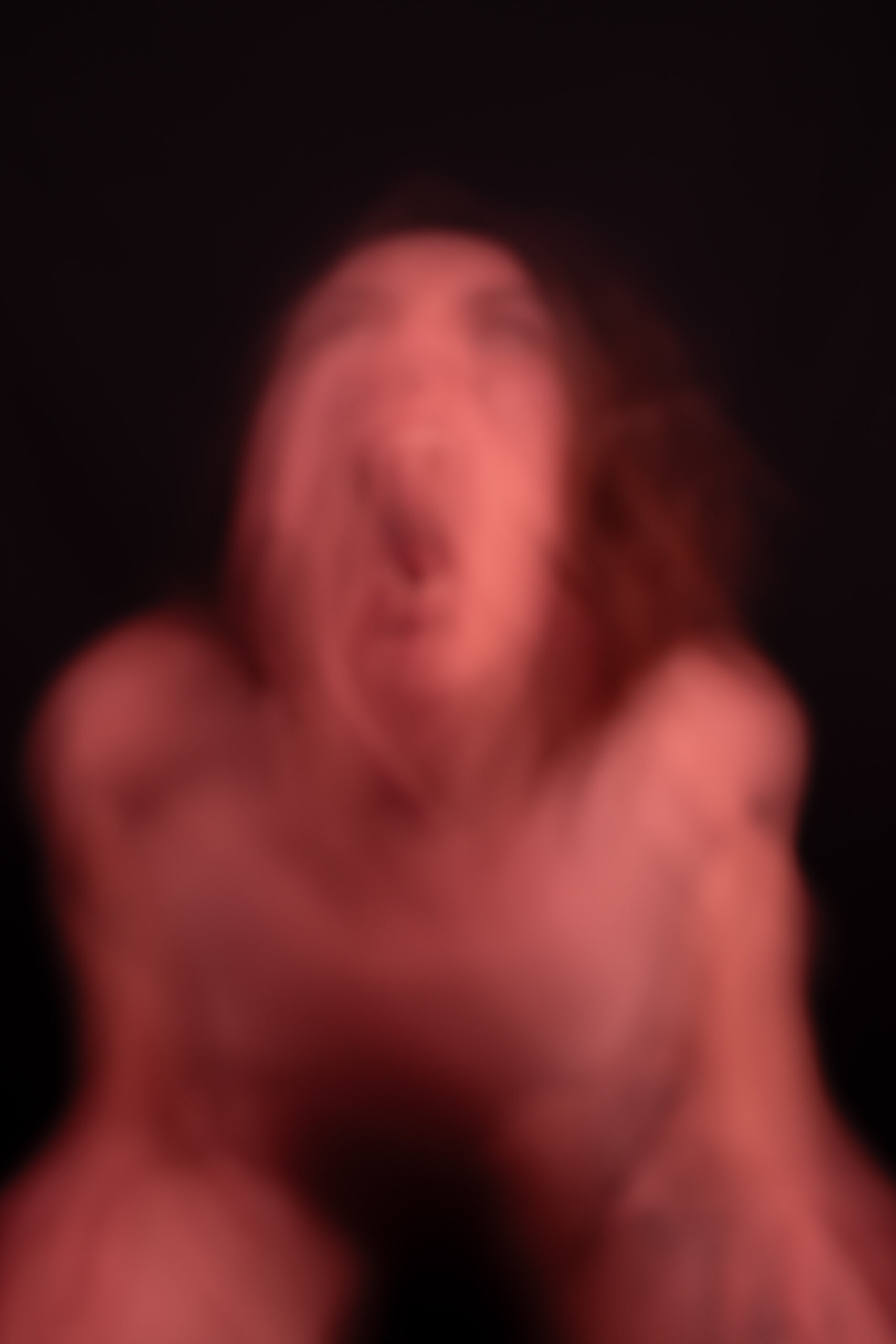
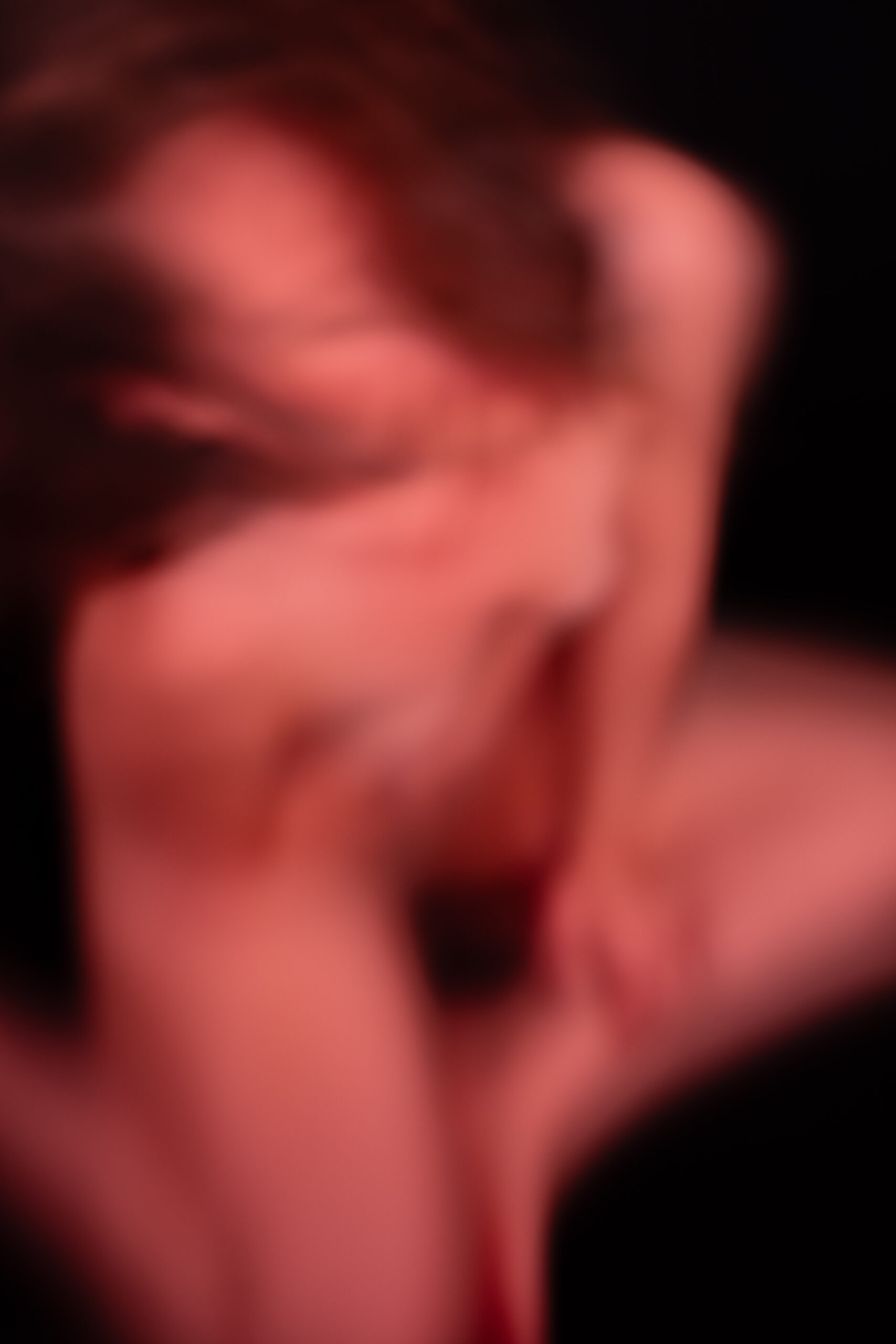
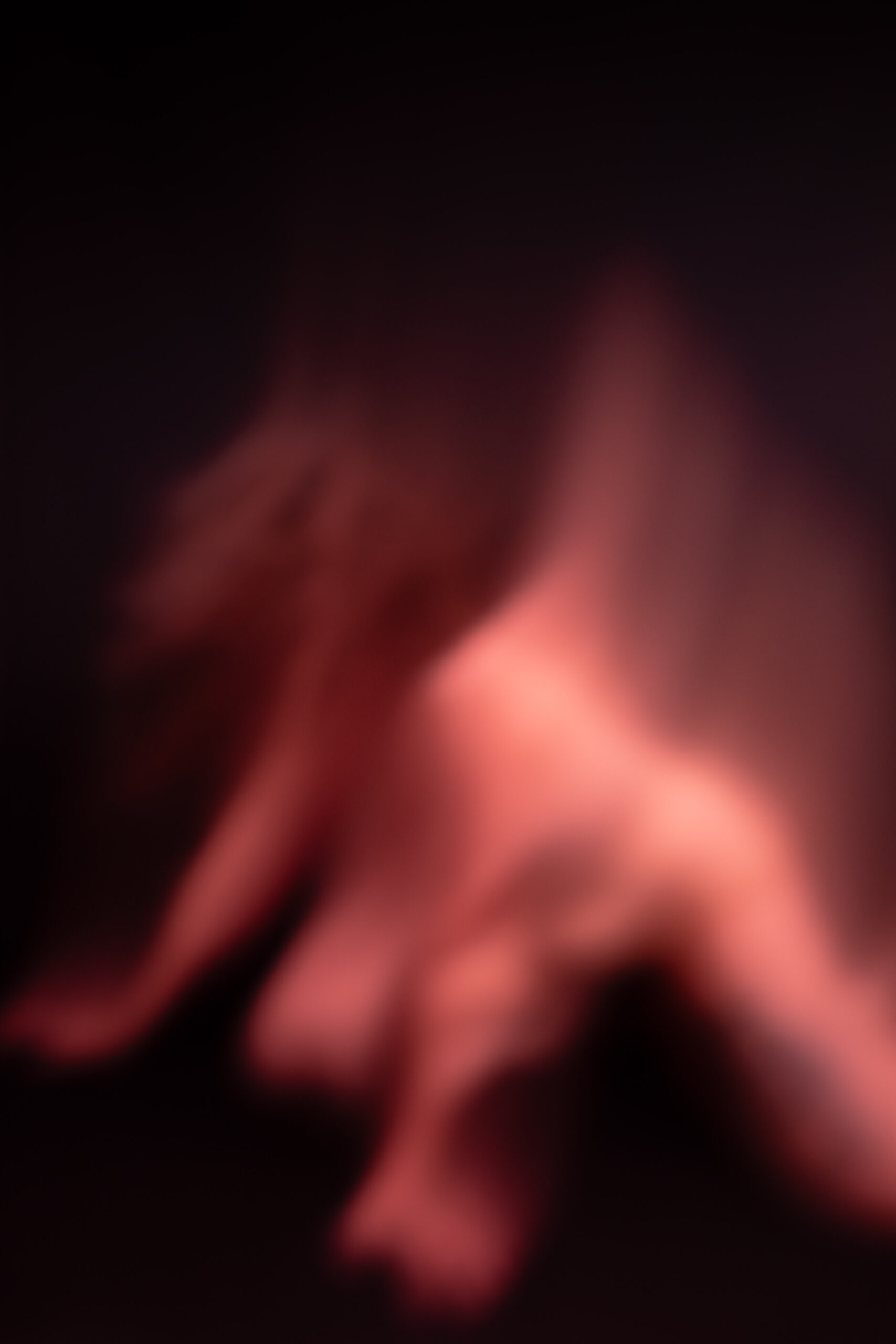
This is the language of survival, not performance, and it is worth naming plainly: pain at this intensity can strip away every social convention a person has ever learned, leaving only the oldest, most automatic responses a body has. There is no polite way to describe grunting or hissing through pain, and Rowan does not attempt one. That refusal to soften the description is precisely what makes it valuable. Endometriosis is frequently minimised in casual conversation as “bad periods,” and testimony like Rowan’s is a direct, necessary correction to that framing. When Rowan describes their insides becoming their outsides, the boundaries of the body torn down, they are describing something many people with severe endometriosis will recognise instantly and something almost no one outside that experience has ever had described to them so plainly. That gap, between the reality and the public understanding of it, is exactly what this collaborative art project exists to close.
Play Inside the Pain
For all the rawness of Rowan’s description of a flare, their account of the shoot itself carried something unexpected: lightness.
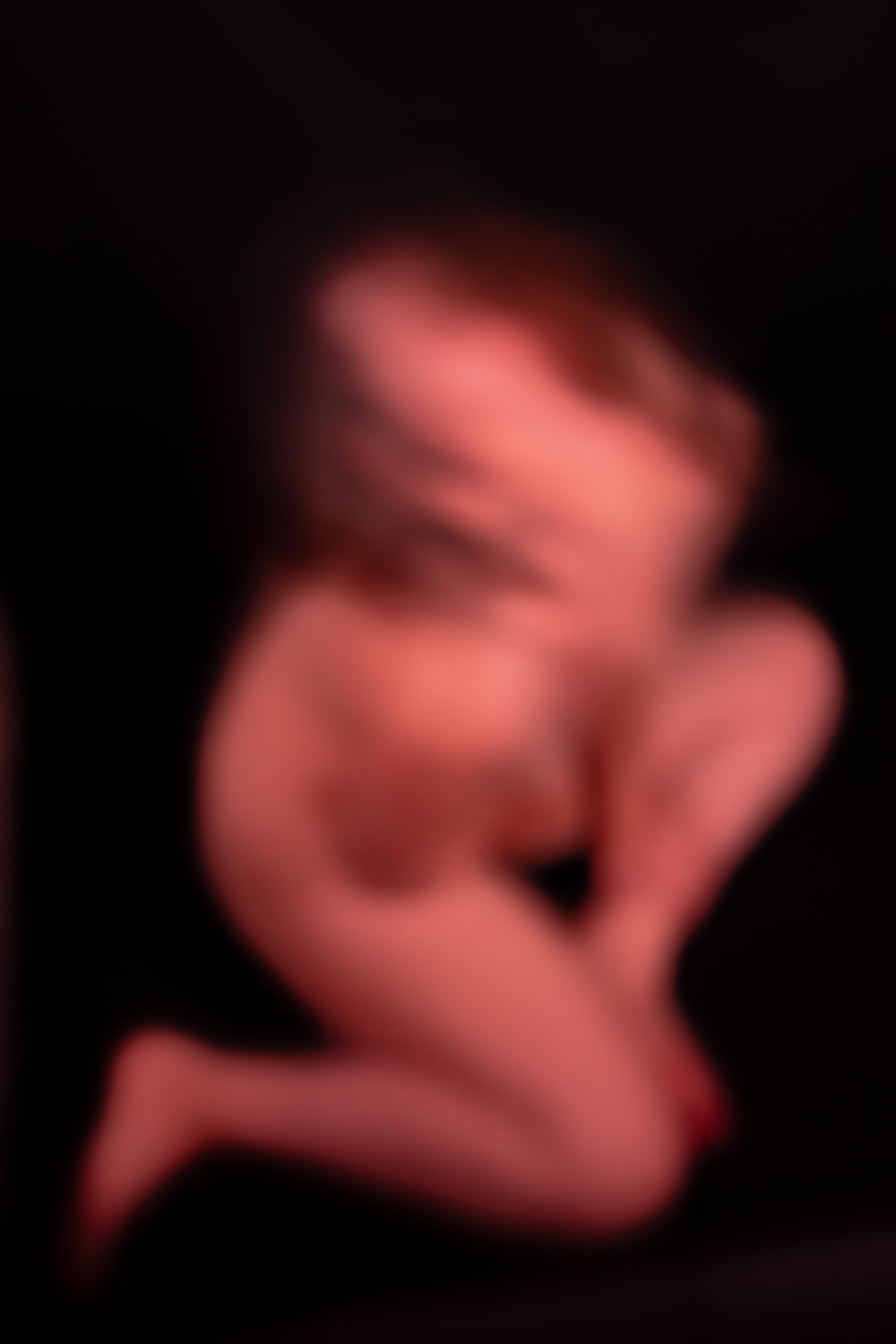
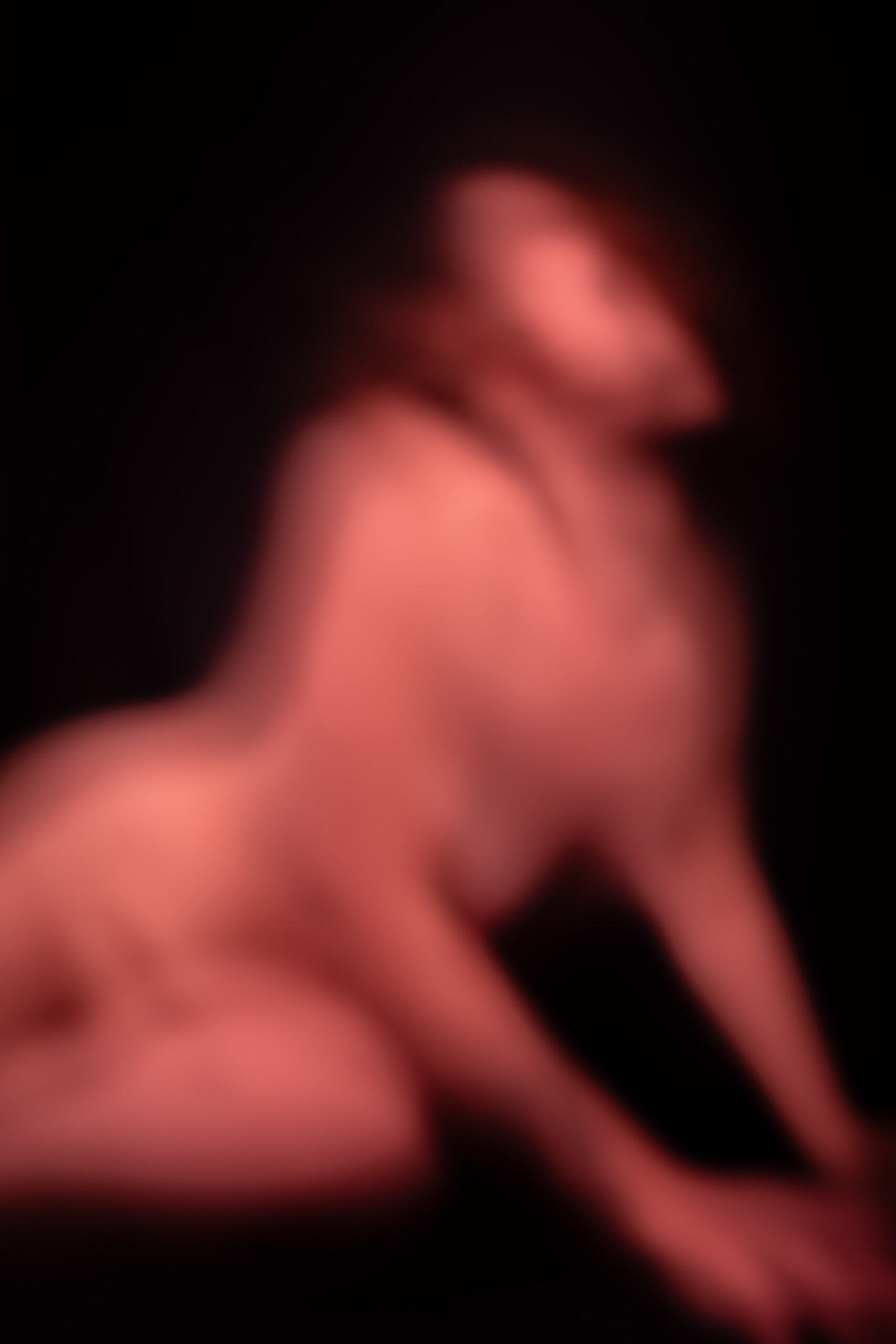
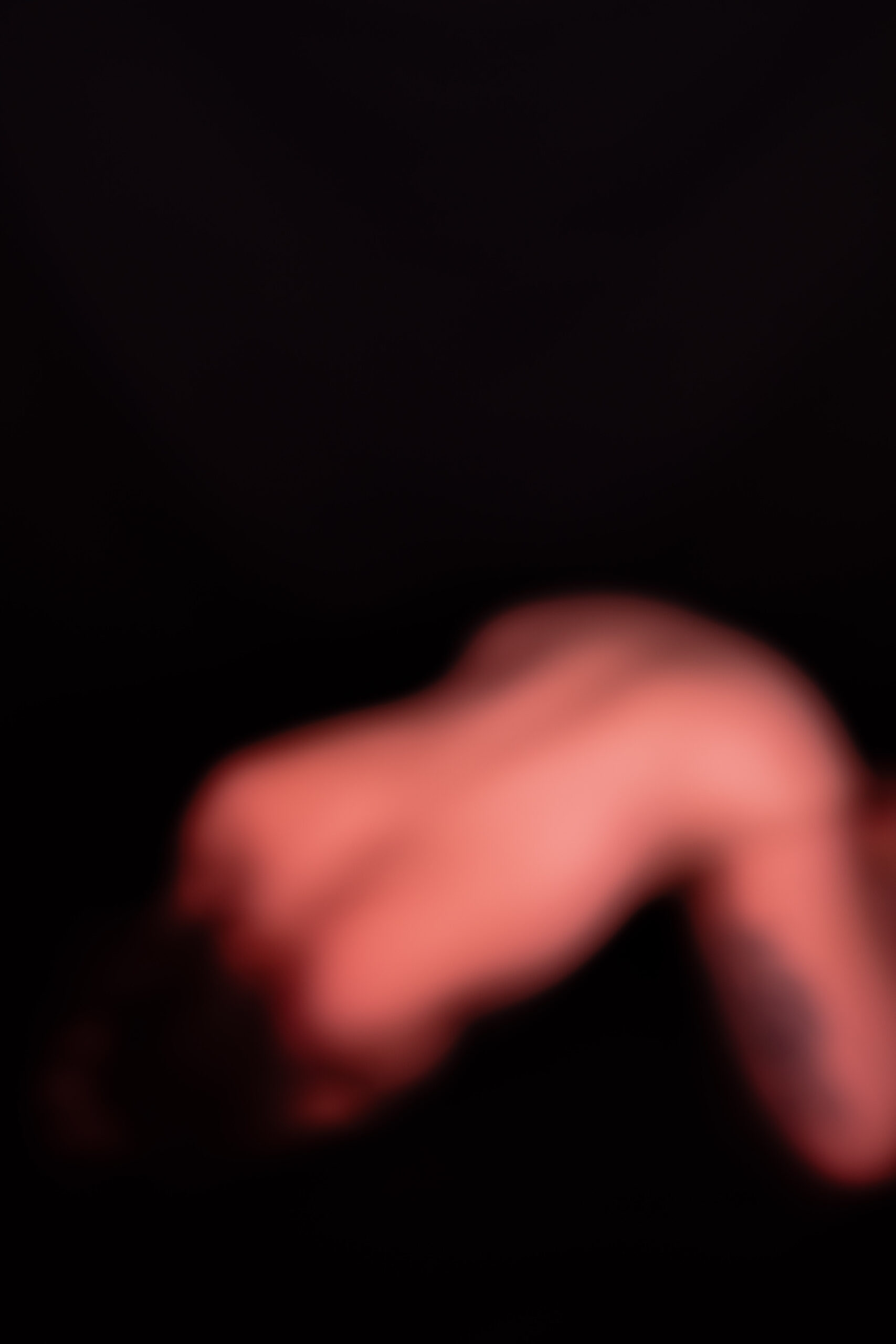
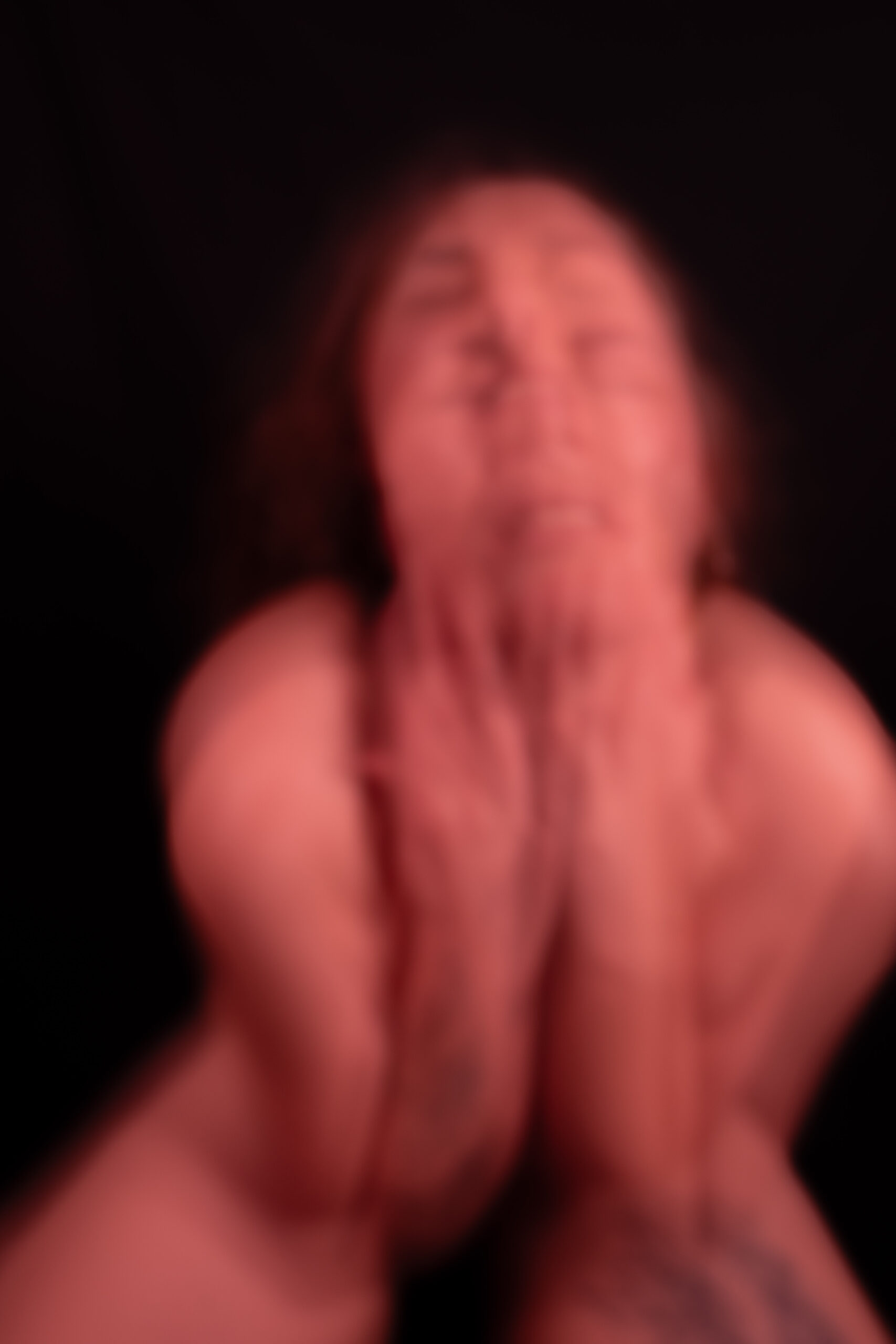
During the shoot I felt so welcomed by Phoebe to be exactly as I needed to be. We explored all the aspects and themes that arose for me and my experience, the movement, the loneliness, the anger and grief. There was a sense of play, which I enjoyed, even in the exploration of something so painful. I loved the creativity and freedom to express something so personal. It’s been a truly cathartic experience.
Catharsis, the release that comes from expressing something painful rather than suppressing it, is a recognised and valuable part of processing chronic illness, and it is rarely available through medical appointments alone, which tend to focus on symptoms and treatment rather than meaning or emotional release. Phoebe Wingrove’s approach, giving Rowan room to move, make sound, and be photographed exactly as their pain wanted to be shown, offered a kind of expressive freedom that talking alone often cannot reach.
Why This Project Matters
Rowan’s hope, stated so simply at the start of their reflection, that creative representation might help someone else feel less alone, is the entire premise of this collaborative art project. Endometriosis South Coast commissioned this series with Phoebe Wingrove because awareness campaigns built on statistics alone rarely reach the people who need them most: those currently mid-flare, isolated, and unsure whether what they are feeling is normal or worth mentioning to anyone. Rowan’s carousel, alongside Christie’s, Sandy’s, and Anna-Marie’s, is designed to reach exactly that person, at exactly that moment, with a simple message: this has been seen, described, and photographed before, by someone who understands it from the inside.
If You Recognise This Feeling
If Rowan’s description of a flare mirrors your own experience, particularly the isolation or the sense of losing time to pain, you are not alone in it, even if it feels that way at 3am. Endometriosis South Coast offers peer support specifically for people navigating pain of this intensity, connecting you with others who will recognise the “blackhole abyss” Rowan describes without needing it explained. If flares are leaving you unable to work, study, or function for extended periods, that is a reasonable basis for requesting an urgent gynaecology referral, not an overreaction, and it is worth saying so explicitly to your GP rather than downplaying it. Severe pain that disrupts daily life is a medical symptom, not a personal failing, however primal or undignified it may feel in the moment. It can also help, in the aftermath of a bad flare, to have a plan already written down before the next one arrives: who to call, what has helped before, and permission, given to yourself in advance, to cancel plans and simply survive the hours until it passes.
Thank you, Rowan, for describing something this raw with this much honesty, and thank you to Phoebe Wingrove for creating a space where that honesty could be expressed rather than hidden. Rowan’s story continues across four carousels this October, following on from Christie’s and Sandy’s series and ahead of Anna-Marie’s. Follow along, share this with someone who has ever felt like a balled up mess of flesh and blood with nowhere to put it, and remember that being seen, even in a photograph, can be its own kind of relief.
Words: Rowan · Photography: Phoebe Wingrove